How a Mobile Food Ordering System Improves Customer Experience
Updated - May 16, 2026 at 11:58 am | 983 Views
Introduction
The restaurant industry has transformed dramatically over the last decade, and one of the biggest game-changers has been the mobile food ordering system. With customers increasingly relying on smartphones for everyday tasks, food businesses can no longer depend solely on dine-in or phone-based orders.
A well-designed mobile ordering system doesn’t just streamline operations for restaurants—it directly enhances customer experience. In this blog, we’ll explore the ways mobile ordering improves convenience, speed, and overall satisfaction for today’s digital-first diners.
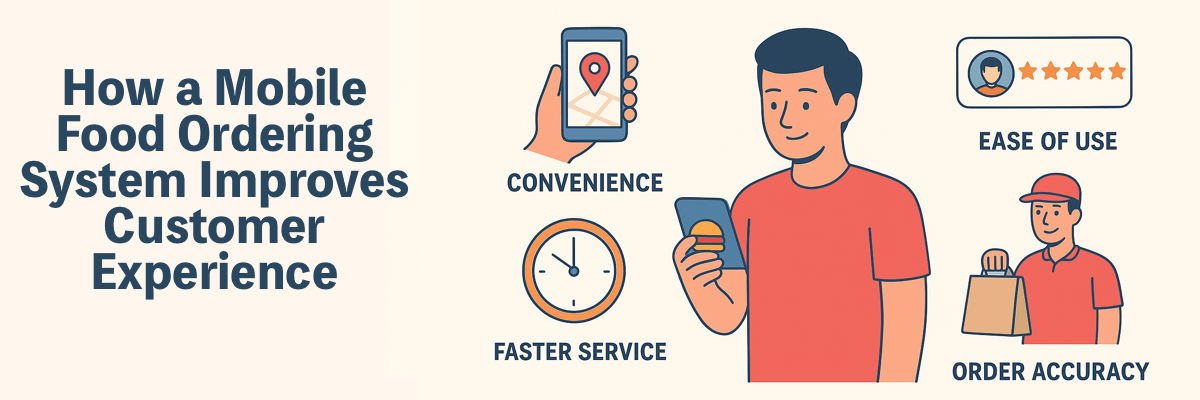
1. Convenience at Customers’ Fingertips
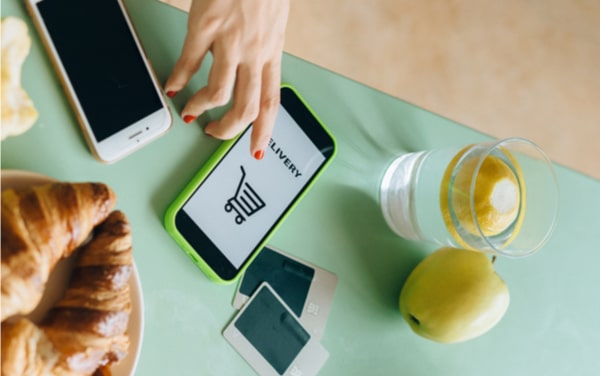
Mobile food ordering allows customers to browse menus, customize orders, and pay—all from their smartphones.
No waiting in line.
Orders can be placed anytime, anywhere.
Customers enjoy the flexibility of ordering on the go, whether at work, home, or while commuting.
Result: A frictionless experience that builds loyalty and repeat business.
2. Faster Ordering and Reduced Wait Times
Long queues and slow service are major customer pain points. With mobile ordering:
Orders are processed instantly.
Kitchens can start preparation as soon as an order is placed.
Customers get accurate estimates for preparation and delivery times.
Result: Customers receive their food faster, leading to higher satisfaction.
3. Order Accuracy and Customization
Miscommunication during phone or in-person orders often leads to mistakes. Mobile systems eliminate this problem by allowing customers to:
Select items directly from the menu.
Add/remove ingredients with customization options.
Review their cart before checkout.
Result: Fewer errors, happier customers, and reduced food waste for restaurants.
4. Seamless Payment Options
Today’s customers value convenience in payments as much as in ordering. Mobile systems offer:
Multiple payment methods (UPI, credit/debit cards, wallets, net banking).
Secure and contactless transactions.
Saved payment details for quick reorders.
Result: Smooth checkout experience that encourages repeat orders.
5. Real-Time Tracking and Updates
Customers appreciate transparency in service. With mobile ordering apps, they can:
Track order status in real time.
Receive push notifications for confirmation, preparation, and delivery.
Estimate arrival times accurately.
Result: Reduced anxiety, increased trust, and improved overall experience.
6. Personalized Offers and Loyalty Programs
Mobile food ordering systems can integrate customer data to provide personalized experiences:
Tailored discounts based on order history.
Reward points for frequent purchases.
Notifications about new menu items or special deals.
Result: Customers feel valued, which increases retention and brand loyalty.
7. Accessibility and Inclusivity
Mobile ordering makes food services accessible to a wider audience:
Multilingual menus for diverse customer bases.
Voice search and accessibility features for differently-abled users.
Easy integration with delivery services for those unable to visit restaurants.
Result: Broader reach and an inclusive customer experience.
Conclusion
A mobile food ordering system is no longer just a convenience—it’s a necessity for restaurants looking to stay competitive. From faster service and accurate orders to personalized offers and real-time tracking, it enhances every aspect of the customer journey.
If you’re planning to upgrade your restaurant with a mobile ordering solution, explore our Mobile Food Ordering System Development Services to deliver the experience your customers expect.
Running a food business today is no longer only about serving good food. For restaurant groups, cloud kitchens, franchise chains, and businesses operating multiple restaurant outlets, digital convenience has become equally important. Customers expect fast ordering, smooth payments, real-time delivery tracking, and a seamless mobile experience. When a business operates several restaurants, handling these expectations manually becomes difficult. That is why multi restaurant businesses are increasingly investing in advanced food delivery technology.
At Goteso, as a food delivery app development company, we develop custom food delivery applications designed specifically for businesses managing multiple restaurants under one digital system. Our goal is to help restaurant brands centralize operations, improve efficiency, and create a stronger customer experience.
The Problem Multi Restaurant Businesses Face
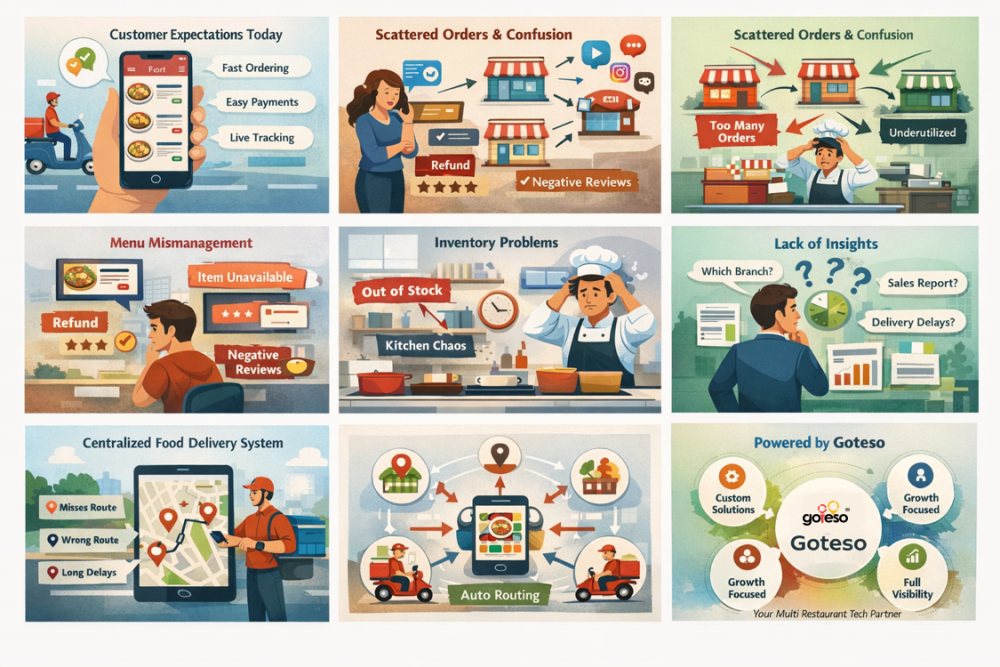
Running one restaurant is already challenging. But when a business manages multiple restaurants, multiple branches, cloud kitchens, or franchise outlets, operations become far more complex. As food businesses expand, many owners begin facing problems that directly affect customer experience, delivery efficiency, and overall growth. One of the biggest challenges is order management. Orders often come from different channels:
phone calls
social media
third-party delivery platforms
websites
walk-in customers
Because these orders are spread across different systems, restaurant teams often struggle to organize them properly. This creates confusion. Sometimes one branch receives too many orders while another branch remains underutilized. Without a centralized system, businesses cannot automatically route orders to the nearest or most suitable restaurant. This leads to delays. And in food delivery, even a few extra minutes can affect customer satisfaction.
Another major problem is menu management across multiple restaurants. Different branches may offer:
different pricing
different food availability
branch-specific offers
regional menu items
When menus are updated manually, mistakes happen frequently. A customer may order an item that is unavailable at that branch. This creates cancellations, refunds, and negative reviews.
A serious issue multi restaurant businesses face is inventory visibility. When several branches operate independently, stock tracking becomes difficult. A branch may run out of ingredients, but the system may still accept orders. This causes kitchen stress, delayed preparation, and poor customer trust. Without digital inventory synchronization, business owners lose operational control.
Then comes delivery coordination. For businesses handling their own delivery fleet, assigning drivers manually creates problems. Common issues include:
delayed rider assignment
wrong route selection
delivery overlap
long delivery times
When multiple restaurants and multiple drivers are active together, manual delivery management becomes highly inefficient. A food delivery app solves this by automatically assigning nearby delivery agents and optimizing routes.
Another challenge is lack of centralized reporting. Business owners need answers to important questions:
Which branch performs best?
Which menu items sell the most?
Which area receives the highest number of orders?
Which branch has delivery delays?
Without a unified dashboard, this information is hard to access. And without data, business decisions become weak.
Customer experience also becomes inconsistent across branches. Some branches may provide fast service. Others may struggle. Customers notice these differences immediately. A customer does not judge one branch separately — they judge the whole brand. That means one weak outlet can affect the reputation of the entire restaurant business. The way food delivery app solves this problem is by automatic order routing. Instead of sending all orders manually to whichever branch notices them first, the app can automatically assign an order to the most suitable branch based on:
customer location
branch availability
kitchen workload
delivery distance
This prevents one branch from becoming overloaded while another branch remains free.
Another growing problem is dependence on third-party food delivery platforms. Many multi restaurant businesses rely heavily on external aggregators.But this creates issues:
high commission charges
limited brand control
restricted customer data access
reduced profit margins
Businesses lose direct relationships with their customers. That is why many restaurant brands now invest in their own food delivery platform.
How a Food Delivery App Solves These Challenges
A dedicated food delivery app brings all restaurant operations into one centralized system.
Customers can browse multiple restaurants, compare menus, place orders, and track deliveries from one app.
At the business level, owners gain full visibility across all branches.
Orders can automatically route to the nearest restaurant.
Menus can be managed branch-wise.
Pricing can be controlled individually.
Delivery becomes more efficient.
Customer communication becomes stronger.
This creates both operational clarity and customer satisfaction.
Key Features in Multi Restaurant Food Delivery App Development
Customer Application
Customers need a smooth and simple interface with features such as:
restaurant browsing
smart search
menu filters
add to cart
secure payments
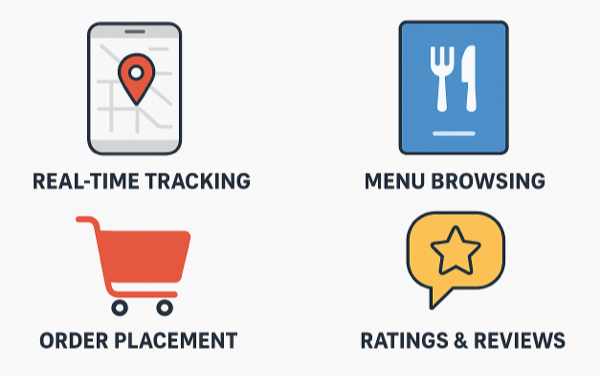
live order tracking
ratings and reviews
repeat ordering
Restaurant Branch Dashboard
Each branch gets control over:
incoming orders
menu updates
item availability
pricing control
preparation status
Central Admin Panel
A central admin panel allows complete business control over:
all restaurant branches
commissions
reports
offers
customer management
delivery zones
revenue analytics
Delivery Partner App
Delivery teams receive:
instant order notifications
route optimization
order tracking
status updates
earnings visibility
Why Custom Development Matters
Every food business operates differently. Some businesses manage:
restaurant chains
cloud kitchens
franchise outlets
regional food brands
A ready-made platform often cannot support these unique business structures. That is why custom development becomes important. At Goteso, as a leading food delivery app development company, we build scalable solutions according to business goals, customer flow, and future expansion plans. As your business grows, new restaurants can easily be added.
Revenue Opportunities
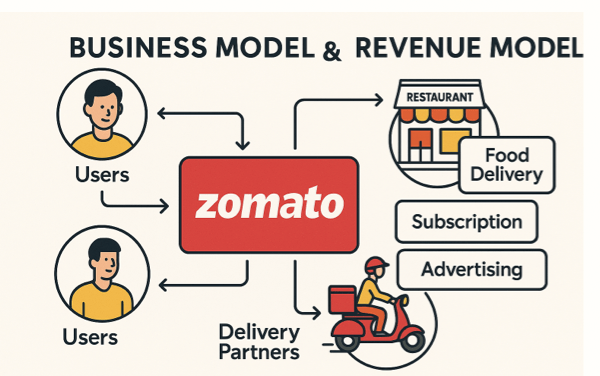
A multi restaurant app also creates multiple digital revenue channels:
delivery charges
restaurant commissions
featured restaurant promotions
subscription plans
in-app advertisements
This turns the app into a strong long-term business asset.
Why Choose Goteso
At Goteso, we build food delivery technology designed for modern restaurant businesses. We focus on:
custom mobile app development
scalable backend systems
multi vendor architecture
delivery automation
business growth support
Our solutions help restaurant businesses move beyond traditional operations into scalable digital growth. A properly built food delivery app is no longer just a digital tool. It becomes the operating backbone of a growing food business. For multi restaurant brands, this backbone is essential for scale, control, and long-term customer retention.
If you want to build a powerful food delivery platform for your multi restaurant business, connect with Goteso.
The online food delivery industry has undergone a massive transformation over the last few years. With consumer demand for convenience at an all-time high, launching a marketplace food delivery app like Swiggy, Zomato, or Uber Eats can be a highly profitable venture.
But success depends on more than just listing restaurants and accepting orders. To stand out in a competitive market, your app must offer a smooth, feature-rich experience for customers, restaurants, delivery partners, and administrators alike.
In this blog, we break down the must-have features to include in your marketplace food delivery app—across all user modules.
What Is a Marketplace Food Delivery App?
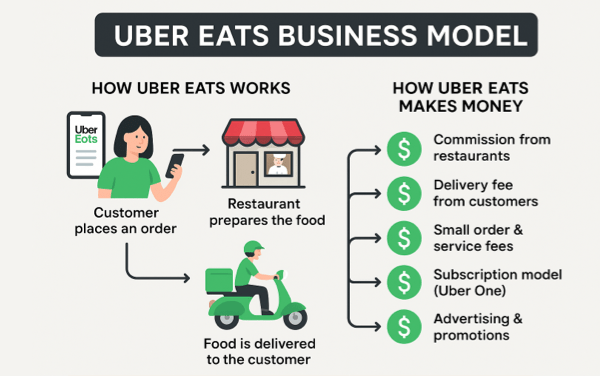
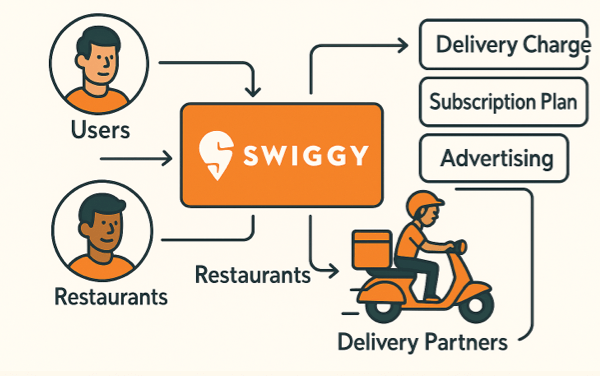
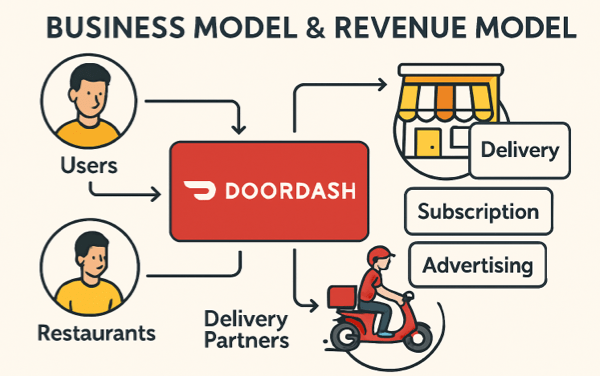
A marketplace food delivery app is a platform that connects multiple restaurants, customers, and delivery partners. You make money through commissions, delivery fees, advertising, or subscription models.
Popular examples include:
Swiggy
Zomato
Uber Eats
DoorDash
Grubhub
Now let’s look at what features are essential to build a successful platform like these.
Key Features for a Marketplace Food Delivery App
1. Customer App Features
This is the primary interface for end-users to discover restaurants and place orders. Your customer app should focus on ease of use, speed, and personalization.
Key Features:
User Registration & Login
Email, phone number, or social logins
OTP verification for secure access
Search & Filters
By cuisine, rating, delivery time, distance, and budget
Smart Recommendations
AI-based dish suggestions and restaurant matches
Menu Browsing
Rich images, item descriptions, and customization options
Cart & Checkout
Easy item addition, promo code support, and order summary
Multiple Payment Options
UPI, cards, wallets, cash on delivery
Live Order Tracking
Real-time GPS-based delivery status
Ratings & Reviews
For restaurants, dishes, and delivery partners
Push Notifications
For order updates, offers, and delivery alerts
Reorder/Repeat Functionality
Quick access to favorite or past orders
2. Restaurant/Vendor App
Restaurants must be able to manage their listings, menus, orders, and promotions efficiently.
Key Features:
Restaurant Onboarding
KYC upload, approval, and profile setup
Menu Management
Add/edit items, categories, pricing, availability
Order Management
Accept/reject orders, update preparation status
Live Order Dashboard
View all incoming, ongoing, and completed orders
Business Analytics
Daily earnings, popular dishes, order volume
Promo & Discount Tools
Run restaurant-level offers and loyalty programs
Inventory Status
Mark items as out-of-stock in real time
3. Delivery Partner App
Delivery drivers need a mobile-first app to navigate, pick up, and deliver orders.
Key Features:
Driver Registration & KYC
Upload ID proof, vehicle docs, and bank details
Order Notifications
Real-time ping when nearby orders are available
Route Optimization & Maps
Integrated GPS for the fastest route
Pickup & Drop Status Updates
Notify restaurant and customer about delivery stage
Earnings Dashboard
Daily, weekly, and monthly income tracking
Payout Requests
Instant or scheduled payment transfers
Ratings & Feedback
Option to rate customers and report issues
4. Admin Panel
This is the control center for the platform owner to manage everything.
Key Features:
Dashboard Overview
Total users, orders, sales, and commissions
Restaurant & Driver Management
Approvals, suspensions, and performance tracking
Commission Setup
Set platform fees, delivery charges, and taxes
Content & Banner Management
Manage homepage banners, notifications, and SEO
Promo & Coupon Engine
Create platform-wide campaigns
Analytics & Reports
Real-time data on orders, earnings, and user behavior
Dispute Management
Handle order issues and refunds
Multi-City/Multi-Zone Support
Set delivery zones, city-wise charges, and availability
Bonus Features to Stand Out
To differentiate your food marketplace from competitors, consider adding:
AI-Powered Chatbots
For customer service and order support
Voice Ordering
Let users place orders via Alexa, Google Assistant, or Siri
Subscription Plans
Loyalty programs for free delivery or discounts
Multi-Language & Currency Support
For regional and global expansion
Dark Mode
Improves user experience during night-time browsing
Referral & Wallet System
Boosts user acquisition and retention
Scheduled Orders
Let customers pre-book meals in advance
Who Can Use This Marketplace Model?
Aggregators & Startups launching local delivery platforms
Restaurant chains looking to centralize delivery
Cloud kitchen operators wanting to build a digital brand
Entrepreneurs creating regional or niche food apps
Grocery or liquor platforms adding food as a category
Final Thoughts
Building a successful marketplace food delivery app takes more than just an app—it requires a well-rounded feature set that serves every stakeholder: the customer, the restaurant, the delivery partner, and the admin.
By integrating the features listed above, you ensure a smooth, engaging, and scalable platform that keeps users coming back—and helps you grow in a competitive market.
Need Help Building Your Food Delivery App?
We specialize in building custom and white label food delivery appswith all the features you need to launch and scale your food tech business. Contact us now!
In today’s fast-paced digital world, convenience is king—especially in the food delivery industry. As customers demand faster, easier, and more intuitive ways to place their orders, restaurants and food delivery platforms are turning to voice ordering and AI-powered chatbots to revolutionize the way we interact with food services.
Welcome to the future of frictionless food ordering.
What Is Voice Ordering?
Voice ordering uses voice recognition technology, like Amazon Alexa, Google Assistant, or Siri, to allow users to place food orders by simply speaking. Instead of tapping through apps or browsing menus, a customer can say:
“Hey Google, order my usual pizza from Domino’s.”
The system recognizes the voice, retrieves previous orders or preferences, and processes the transaction—completely hands-free.
What Are Chatbots in Food Ordering?
A chatbot is an AI-powered assistant that interacts with users via text (and sometimes voice) on platforms like websites, mobile apps, WhatsApp, or Messenger. In the context of food ordering, chatbots can:
Take new orders
Recommend dishes based on past behavior
Handle payments
Track deliveries
Manage complaints and feedback
These bots can operate 24/7 without breaks, ensuring customers always have support—even during off-hours.
Why Voice Ordering and Chatbots Are Game-Changers
1. Frictionless User Experience
Forget tapping, typing, or scrolling. Just speak or chat to order your food. It’s fast, intuitive, and ideal for multitasking customers.
2. Personalization at Scale
AI chatbots can remember past orders, dietary preferences, and even suggest new items based on user behavior. Voice assistants can do the same, creating a personalized dining experience.
3. Higher Order Accuracy
With predefined menus and conversational flows, AI reduces the chance of human error in taking orders over phone calls or at counters.
4. 24/7 Availability
Your digital ordering assistant doesn’t sleep. Voice and chatbot ordering systems can handle thousands of orders round-the-clock, with zero wait time.
5. Increased Efficiency for Restaurants
Automation frees up human staff from repetitive tasks like order-taking and allows them to focus on food preparation, customer service, and delivery logistics.
Market Trends Supporting This Shift
According to Juniper Research, AI-powered chatbots will handle over 70% of customer interactions in the food industry by 2026.
Voice commerce is expected to reach $30 billion by 2030, with food ordering being a key use case.
Big brands like Domino’s, Starbucks, and McDonald’s have already implemented voice ordering systems via smart speakers and apps.
How Restaurants and Food Tech Startups Can Adapt
Implementing voice and chatbot ordering isn’t just for giants. With modern white label food delivery apps and AI integrations, even small and mid-sized restaurants can get on board.
Here’s how:
Integrate voice assistants with your app or website (via Alexa Skills or Google Actions)
Use WhatsApp or Messenger chatbots to allow conversational ordering
Implement AI chatbots on your website or mobile app with NLP (natural language processing)
Offer order tracking, loyalty programs, and feedback via bots
Real-Life Example: Pizza Ordering with Voice
User: “Alexa, order my usual pizza from Mario’s Pizza.”
Alexa: “Hi! Would you like to reorder the Margherita Pizza with extra cheese?”
User: “Yes.”
Alexa: “Great! Your order is being prepared and will arrive in 30 minutes. Do you want to pay with your saved card?”
User: “Yes.”
Alexa: “Order placed. Enjoy your meal!”
This voice-first ordering experience removes nearly all the friction that comes with traditional food ordering apps.
Challenges to Consider
While promising, voice and chatbot ordering systems must overcome:
Accent and language barriers
Security concerns around voice authentication and payments
Menu complexity for restaurants with large or customizable offerings
Integration difficulties with legacy POS or order management systems
However, with continuous improvements in AI and voice tech, these hurdles are quickly being addressed.
Final Thoughts
Voice ordering and AI chatbots are no longer futuristic concepts—they’re actively shaping the future of food tech. For restaurants and delivery platforms looking to improve customer engagement, streamline operations, and stay competitive, these tools are no longer optional—they’re essential.
If you’re in the food delivery or restaurant business, it’s time to think beyond traditional apps and embrace voice and conversational commerce.
Because the future of food ordering isn’t just digital—it’s invisible, intuitive, and intelligent.
With the rapid growth of digital dining and hyperlocal delivery, food delivery apps have become a crucial part of the restaurant and food-tech ecosystem. If you’re planning to build an app like Zomato, Swiggy, or your own branded delivery platform, the first question is often:
“What is the food delivery app development cost in India?”
In this blog, we break down the costs, features, timelines, and factors that influence the total investment for developing a food delivery app in India in 2026.
Why Build a Food Delivery App?
The food delivery market in India is booming. With increasing smartphone penetration, UPI payments, and changing consumer behavior, launching a food delivery app is not just a trend—it’s a business opportunity.
Aggregator platform planning to compete with the giants
a custom food delivery app gives you full control over branding, customer data, and revenue.
Food Delivery App Development Cost in India: The Short Answer
On average, the food delivery app development cost in India ranges between ₹3,50,000 to ₹20,00,000+ depending on the scope, complexity, and technology stack.
Ask for demos, timelines, and a clear cost breakdown before signing any agreements.
Final Thoughts
The food delivery app development cost in India is significantly more affordable compared to Western markets, making India a top destination for startups and restaurants planning to launch their own delivery app.
Whether you’re building from scratch or choosing a white label solution, investing in a mobile-first food ordering system is a smart move in 2026 and beyond.
Need Help with Food Delivery App Development?
We offer both custom-built and white label food delivery app solutions designed to fit your budget and goals. Schedule a free consultation to explore your options.
The food delivery industry has exploded in recent years, with more consumers choosing the convenience of ordering meals from their favorite restaurants directly to their doorstep. Whether you’re a startup aiming to launch your own food delivery app or an established business looking to upgrade your existing platform, the features you integrate are crucial to ensuring a seamless, user-friendly experience for both customers and restaurants.
At Goteso, a leading food delivery app development company, we specialize in creating robust, scalable, and feature-rich apps that meet the unique needs of the food delivery system. In this blog, we’ll walk you through the essential features every successful food delivery app must have, ensuring that your platform provides an excellent experience for both customers and restaurants.
1. User-Friendly Interface for Customers
The first step to success in the food delivery business is providing a smooth, intuitive experience for your customers. The user interface (UI) should be simple, visually appealing, and easy to navigate.
Key Features:
Registration and Profile Management: Customers should be able to quickly register using their email, phone number, or social media accounts and maintain a profile with payment options, delivery addresses, and order history.
Search and Filters: A powerful search function that allows users to easily find restaurants by cuisine type, food category, delivery time, ratings, and distance.
Menu and Item Customization: Customers should be able to browse restaurant menus with detailed descriptions, high-quality images, and customization options for dishes (e.g., extra toppings or special dietary preferences).
Easy Checkout Process: A streamlined and quick checkout process with multiple payment options (credit/debit cards, digital wallets, etc.), including secure payment gateways.
Goteso ensures that these features are designed with a focus on ease of use and speed, providing customers with a frictionless experience that keeps them coming back.
2. Real-Time Order Tracking
Real-time tracking is a key feature that customers expect from food delivery apps. Knowing exactly where their order is and when it will arrive makes the entire experience more transparent and convenient.
Key Features:
GPS Tracking: Customers can see the exact location of the delivery driver on a map in real-time, from restaurant pickup to delivery to their doorstep.
Estimated Delivery Time: Accurate time estimates based on the driver’s location, traffic, and weather conditions.
Push Notifications: Automated updates that notify customers about order status (order confirmation, food preparation, pickup, and delivery arrival).
At Goteso, we integrate advanced GPS technology and route optimization algorithms to ensure that customers get timely and reliable delivery information.
3. Order Management for Restaurants
The restaurant-side of the app is where the magic happens. Efficient order management is essential for ensuring that food is prepared and delivered on time.
Key Features:
Order Notifications: Restaurants receive instant notifications for new orders, including order details and delivery address.
Order Status Updates: The ability to mark orders as “Being Prepared,” “Ready for Pickup,” and “Out for Delivery” to ensure both drivers and customers know the status.
Menu Management: Restaurants can update their menu in real-time, including pricing, availability, and new dishes.
Analytics and Insights: Access to performance data such as popular dishes, order volume, and customer feedback, helping restaurants make data-driven decisions to improve service.
With Goteso’s robust restaurant app, food establishments can efficiently handle a high volume of orders, ensuring accuracy and timely service.
4. Delivery Management for Drivers
Managing the delivery process smoothly is vital for both customer satisfaction and operational efficiency. A comprehensive driver app ensures that drivers can efficiently fulfill orders.
Key Features:
Driver Registration: Drivers can register easily and upload necessary documents (license, insurance) for approval.
Real-Time Location Tracking: Drivers can see the most efficient route to pick up and deliver the order, optimizing fuel usage and reducing delivery times.
Task Management: Drivers can receive notifications for new orders, view detailed customer delivery addresses, and mark orders as delivered.
In-App Communication: Built-in chat or calling features allow drivers to communicate directly with the restaurant or customers if there are issues with the order.
With Goteso’s driver app solutions, we ensure drivers can seamlessly navigate through their tasks, making the process more efficient and reducing delivery time.
5. Payment Gateway Integration
A secure and flexible payment system is essential for both customers and restaurants. Offering multiple payment options increases the likelihood of successful transactions and a smoother experience for everyone.
Key Features:
Multiple Payment Options: Customers should have access to multiple payment methods such as credit/debit cards, PayPal, Apple Pay, Google Pay, and cash on delivery.
Secure Payment Gateway: Integration with secure, PCI-compliant payment systems to protect sensitive customer data and prevent fraud.
Order Splitting: A feature that allows customers to split the payment with friends or family, especially for group orders.
Promotions and Discounts: Integration of promo codes, loyalty programs, and discounts, offering customers incentives to order more.
Goteso ensures seamless, secure, and flexible payment integration, helping you cater to a wide variety of customers and ensure hassle-free transactions.
6. Customer Feedback and Ratings
Customer reviews and ratings are powerful tools for building trust and improving service quality. Food delivery apps benefit from giving customers a voice in the form of ratings and reviews.
Key Features:
Rating System: After delivery, customers can rate their experience (food quality, delivery time, driver’s behavior, etc.).
Review Comments: Customers can write feedback on their overall experience, helping restaurants and drivers improve.
Ratings for Restaurants and Drivers: Customers can rate both the restaurant and the delivery driver separately, offering constructive feedback to all parties involved.
Goteso integrates comprehensive feedback management systems, enabling both restaurants and delivery drivers to continually improve based on customer input.
7. Admin Panel for App Management
An admin panel is essential for overseeing the entire platform, managing users, orders, and ensuring everything runs smoothly.
Key Features:
Dashboard Analytics: Track user activity, sales, popular restaurants, peak hours, and more.
User Management: Admins can manage both restaurant profiles and customer profiles, resolving issues such as disputes or cancellations.
Financial Management: Monitor payments, commissions, and payouts to restaurants and drivers, ensuring proper financial tracking.
Promotions & Offers Management: Admins can create and manage promotional offers, coupons, and discounts to attract customers.
At Goteso, we ensure the admin panel is robust and easy to use, giving you complete control over your food delivery platform.
8. Real-Time Analytics and Reporting
For restaurant owners, delivery businesses, and app administrators, real-time analytics are essential to understanding performance and optimizing operations.
Key Features:
Customer Insights: Track customer behavior, popular food items, peak hours, and purchasing patterns.
Delivery Performance: Measure driver efficiency, average delivery times, and overall service quality.
Financial Reports: Detailed reports on revenue, expenses, commissions, and taxes.
Goteso’s data-driven approach ensures that every aspect of your business is tracked in real-time, allowing you to make informed decisions and optimize your services for better customer satisfaction.
Conclusion
A successful food delivery app must seamlessly integrate several key features to provide value for customers, restaurants, and drivers. At Goteso, a top-tier food delivery app development company, we understand that each feature is critical to the app’s performance, user experience, and overall success.
By combining features like real-time order tracking, payment integrations, user-friendly interfaces, efficient restaurant management, and robust analytics, Goteso helps you create an app that stands out in a competitive market. Whether you’re just getting started or looking to upgrade your existing app, we provide solutions that align with your goals and deliver a seamless experience for everyone involved.
Ready to build your food delivery app? Contact us today, and let’s transform your ideas into reality!
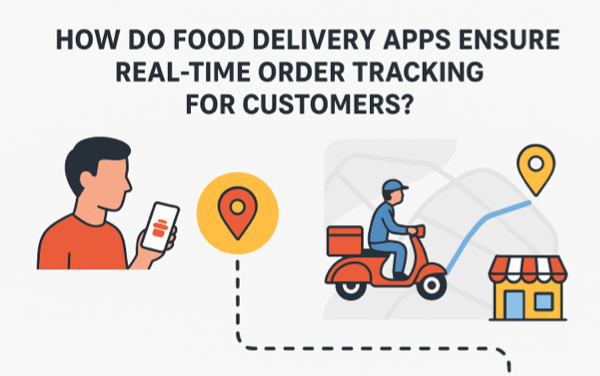
In the world of food delivery, ensuring that customers know exactly where their order is and when it will arrive is a key part of the customer experience. Real-time order tracking is one of the most crucial features of any food delivery app, offering transparency, reducing anxiety, and building trust with customers. But how do food delivery apps manage to deliver such precise, up-to-date information?
As a leading food delivery app development company, Goteso integrates several advanced technologies and systems into our food delivery apps to ensure that real-time order tracking is both accurate and reliable. Let’s break down how food delivery apps manage real-time order tracking and the components that make it work seamlessly for customers.
1. GPS and Geolocation Technology
The backbone of real-time order tracking is GPS (Global Positioning System) technology. GPS enables both customers and delivery drivers to know the exact location of the food in transit.
How It Works:
Driver Tracking: Once an order is placed and accepted by a delivery driver, the app uses the driver’s GPS location to track their movement in real time. The driver’s route is continuously updated as they move towards the restaurant, and then on the way to the customer’s location.
Customer Tracking: As the food is on its way, customers can access real-time maps within the app, where they can see the exact location of the driver. They can track the progress of the delivery, including when the driver picks up the food, when the order is on the way, and when it’s nearing the destination.
Goteso ensures that GPS integration is smooth and accurate, minimizing the likelihood of errors in location tracking and providing customers with real-time visibility of their order’s status.
2. Dynamic Route Optimization
For real-time tracking to be accurate, the delivery process itself needs to be optimized. Dynamic route optimization helps the driver follow the most efficient route, reducing delivery time and improving the accuracy of estimated arrival times.
How It Works:
Route Algorithms: The app uses algorithms to analyze traffic, road conditions, weather, and other factors that may impact the delivery route. It adjusts the driver’s path in real-time, ensuring that they avoid traffic jams, road closures, or accidents. This results in the most efficient route being selected at any given moment.
Time Estimation: As routes are optimized, the delivery time window continuously adjusts based on real-time changes, offering customers updated estimates for when their food will arrive.
By integrating real-time traffic data and AI-powered algorithms, Goteso makes sure that customers not only know where their food is but also when it will arrive.
3. Push Notifications and In-App Updates
One of the best ways to keep customers informed during the delivery process is through push notifications and in-app updates. These notifications update customers at critical points in the journey.
How It Works:
Order Confirmation: After placing the order, customers are notified when the restaurant accepts it.
Food Preparation Updates: Customers are notified when food preparation is complete and the order is ready for pickup.
Driver Assignment and Arrival Notifications: When the driver picks up the order, customers receive notifications with real-time tracking links.
Real-Time Delivery Tracking: During the delivery, customers receive continuous updates via push notifications, including when the driver is en route, and when the food is minutes away from arriving. The app may even send a notification when the driver is at the customer’s doorstep.
Goteso designs these notifications to be timely, clear, and informative, enhancing the customer experience and reducing anxiety about the delivery process.
4. Integration with Delivery Driver Apps
In order to facilitate real-time tracking, food delivery apps must be seamlessly integrated with the driver’s app. This is a critical step in ensuring that location data is accurately captured and updated in real time.
How It Works:
Real-Time Location Syncing: Once the restaurant has confirmed the order, the app syncs the location data from the delivery driver’s device, ensuring that their real-time position is reflected in the customer’s app.
Communication and Support: If there’s an issue with delivery (e.g., the driver cannot locate the customer), the app also allows real-time communication between the driver and the customer, either via in-app chat or calls.
By leveraging real-time driver-to-customer syncing, Goteso ensures seamless communication and accurate tracking information.
5. Advanced Mapping Systems and Integration with Maps
A robust mapping system is a crucial component in delivering reliable real-time tracking. Most food delivery apps integrate popular mapping services such as Google Maps or Apple Maps for location data, route optimization, and traffic analysis.
How It Works:
Route Visualization: Maps integrated into the app provide customers with a visual representation of the delivery route, showing the current location of the driver and estimated delivery time.
Traffic and Road Conditions: Real-time traffic updates from the map service help adjust routes as needed, ensuring that delays are minimized.
Geofencing for Location Accuracy: Geofencing technology ensures that the app accurately detects when the driver has arrived at the customer’s location. When the driver enters a designated “delivery zone” near the customer’s address, the system notifies the customer that the food is arriving soon.
By using these mapping services, Goteso ensures that every part of the delivery journey is well-visualized, accurate, and timely.
6. Customer Support and Assistance
Even with advanced tracking, there are times when things don’t go as planned—drivers can get lost, orders may be delayed, or the customer may need more information. In these cases, customer support integration ensures that issues are addressed quickly.
How It Works:
In-App Support: Customers can directly message or call customer support via the app if they face issues like incorrect delivery times or misplaced orders.
Driver Updates: In case of unexpected delays, customer support can provide updates or help resolve issues between the customer and the delivery driver.
With Goteso’s built-in customer support features, any issues with real-time tracking can be immediately addressed, providing peace of mind to customers.
7. Historical Data for Customer Insights
Beyond just real-time tracking, food delivery apps can store historical tracking data for each order, giving customers the ability to review past deliveries.
How It Works:
Order History: Customers can view detailed information about past orders, including tracking data such as delivery routes, times, and any delays.
Feedback Loop: If there were delays, customers can leave feedback, helping restaurants and drivers improve future deliveries.
Goteso ensures that the app not only tracks orders in real time but also provides valuable data for improving future service and making the overall experience smoother.
Conclusion
Real-time order tracking is a must-have feature for modern food delivery apps, offering transparency, peace of mind, and customer satisfaction. By integrating GPS tracking, dynamic route optimization, push notifications, real-time updates, advanced mapping systems, and customer support features, Goteso ensures that food delivery apps deliver accurate, timely, and efficient tracking experiences for customers.
As a food delivery app development company, Goteso is dedicated to creating user-friendly, technology-driven solutions that enhance the customer experience from order placement to delivery completion. Whether you’re a business owner looking to implement these features or a customer simply wanting your food delivered on time, Goteso makes sure the journey is smooth, transparent, and stress-free every step of the way.
Want to build a food delivery app that offers seamless real-time tracking? Goteso can help you bring your idea to life with cutting-edge technology and user-centric design. Let’s get started!
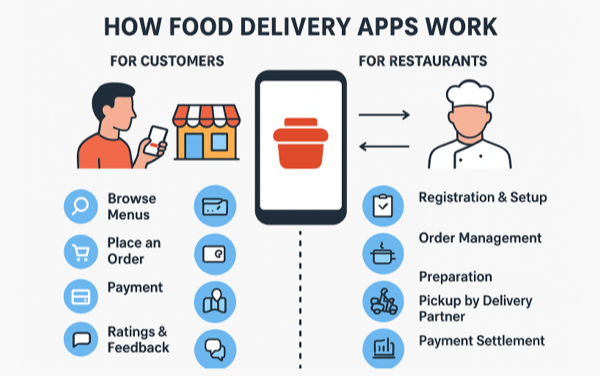
In today’s fast-paced world, food delivery apps have become essential for customers craving convenience and for restaurants seeking new ways to reach a broader audience. With the click of a button, customers can enjoy a variety of cuisines delivered straight to their doorsteps, while restaurants can expand their customer base without managing the logistics themselves. As a leading food delivery app development company, Goteso is at the forefront of building seamless and efficient platforms that connect restaurants and customers in a smooth, easy-to-use environment. In this blog, we’ll explore how food delivery apps work from both the customer and restaurant perspectives, showcasing the benefits for each and explaining how Goteso optimizes these processes.
1. How Food Delivery Apps Work for Customers
For customers, the food delivery app is designed to provide a quick, easy, and enjoyable ordering experience. Here’s a step-by-step look at how food delivery apps work from a customer’s perspective:
1.1 Browse and Choose Your Restaurant
Once customers open the app, they are greeted with a list of nearby restaurants, categorized by cuisine type, ratings, or even specific deals. Customers can search for their favorite dishes, discover new places to try, or explore menus by restaurant. The app provides key information like:
Restaurant ratings and reviews: To help customers make informed choices based on others’ experiences.
Menu with detailed descriptions: Customers can view pictures of dishes, ingredients, and any customization options.
Delivery times and availability: Indicating whether the restaurant is currently available for delivery.
With Goteso’s advanced app development, this browsing experience is fast and responsive, offering filters and search functions that make it easy for users to find exactly what they want.
1.2 Place the Order
Once customers have chosen a restaurant and selected their items, they add them to the cart and proceed to checkout. The food delivery app simplifies this step with a few key features:
Customizable orders: Add notes for specific dish modifications (extra cheese, no onions, etc.).
Order summary: Shows an itemized list of what’s been ordered, including the total price and any applicable taxes or delivery fees.
Payment options: Customers can pay securely through the app using credit cards, digital wallets, or other payment methods integrated into the app.
For a seamless experience, Goteso ensures the payment system is secure, intuitive, and flexible, giving customers a range of payment options while maintaining top-notch security.
1.3 Track the Delivery in Real Time
Once the order is confirmed, customers can track their delivery in real time. Goteso integrates GPS tracking technology so customers can see their delivery driver’s location on the map, along with estimated delivery times. Customers are notified when the food is on its way, when the driver is approaching, and when the delivery has been completed.
Real-time tracking helps manage customer expectations, especially during peak times or in bad weather conditions, providing transparency and reducing anxiety over delays.
1.4 Rate and Review the Experience
After receiving their order, customers can rate their experience and leave reviews based on the food quality, delivery speed, and overall service. These reviews are essential for restaurants to understand customer preferences and improve their offerings.
By leveraging Goteso’s app development expertise, food delivery apps provide an efficient, user-friendly platform that not only helps customers get what they want quickly but also encourages engagement and feedback to improve the overall experience.
2. How Food Delivery Apps Work for Restaurants
For restaurants, food delivery apps offer an invaluable channel to reach customers outside their physical location without investing heavily in delivery infrastructure. Here’s how food delivery apps work from the restaurant’s perspective:
2.1 Join the Platform
Restaurants that want to participate in a food delivery app must first register on the platform. The registration process typically includes:
Providing restaurant details: Name, address, type of cuisine, and hours of operation.
Uploading the menu: Restaurants need to upload their digital menu, including descriptions, prices, and images of the dishes.
Setting delivery parameters: Restaurants can set delivery fees, geographic service areas, and other terms.
Goteso ensures that the onboarding process for restaurants is streamlined, offering easy-to-use app and integrations that allow for quick setup and minimal effort.
2.2 Manage Orders via the Restaurant App
Once the restaurant is registered, it gains access to a restaurant app where it can manage incoming orders. Key features of the app include:
Order management: Restaurants can view real-time orders, track the status of each order, and prepare meals accordingly.
Order preparation timing: Restaurants can set expected preparation times based on order volume, ensuring they’re prepared for busy hours.
Menu updates: Restaurants can easily update their menu, add new items, or change pricing in real time.
Communication tools: If there’s an issue with an order, such as missing ingredients, restaurants can communicate with customers directly through the app.
With Goteso’s intuitive back-end interface, restaurants can easily handle high volumes of orders and maintain operational efficiency.
2.3 Manage Delivery Logistics
Food delivery apps typically offer two options for restaurant delivery:
In-house delivery: The restaurant handles the delivery with its own drivers. The app will provide a system for dispatching orders to drivers.
Third-party delivery: The food delivery app assigns a driver to pick up the food and deliver it to the customer. Restaurants don’t need to worry about logistics in this case.
For restaurants using third-party delivery services, Goteso ensures that the integration between the restaurant’s system and the delivery network is smooth, providing visibility into the entire delivery process.
2.4 Monitor Performance and Analytics
Food delivery apps provide restaurants with analytics to track sales, order volume, customer ratings, and delivery times. This data is invaluable for identifying trends, improving efficiency, and increasing revenue. Some key metrics include:
Revenue tracking: Restaurants can monitor how much they’re earning from food delivery orders, which dishes are most popular, and any fluctuations in demand.
Customer feedback: Customer reviews give restaurants insights into their strengths and areas for improvement.
Order trends: Restaurants can track when orders are highest and adjust staffing or delivery capabilities accordingly.
Goteso integrates robust analytics into the restaurant app, empowering restaurants to make data-driven decisions and optimize their food delivery operations.
3. Benefits for Both Customers and Restaurants
For customers, the benefits are clear:
Convenience: Ordering food from the comfort of your home or office.
Variety: Access to a wide range of cuisines and restaurant options.
Transparency: Real-time order tracking and clear pricing structures.
Personalization: The ability to customize orders and save preferences for future purchases.
For restaurants, the benefits include:
Increased reach: Expand beyond the restaurant’s physical location to attract a broader audience.
New revenue streams: Additional income from delivery orders without the need to invest in in-house delivery infrastructure.
Operational efficiency: Streamlined order management and analytics for better decision-making.
Customer engagement: Collect valuable feedback and foster repeat business through ratings and reviews.
Conclusion
Food delivery apps are a win-win solution for both customers and restaurants. Customers enjoy the convenience of ordering food from a wide selection of restaurants with ease, while restaurants benefit from expanded customer reach and additional revenue streams. As a food delivery app development company, Goteso is committed to building highly efficient, feature-rich platforms that create seamless connections between customers and restaurants. Whether you’re a restaurant looking to expand your delivery operations or a customer seeking a simple, fast way to enjoy your favorite meals, Goteso has the tools to make it happen.
Ready to build your food delivery app? Contact Goteso today, and let’s bring your vision to life!
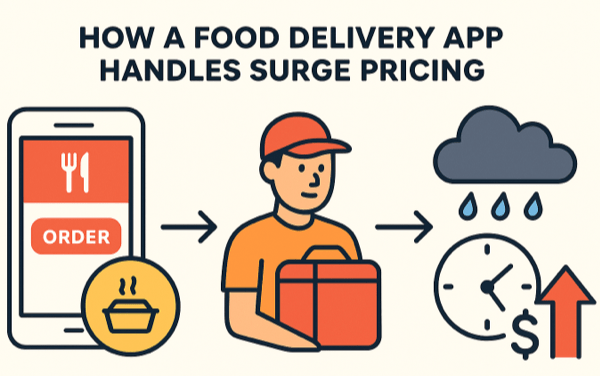
In the food delivery industry, one of the key challenges for businesses is ensuring fair pricing while maintaining service quality, especially during periods of high demand. Whether it’s peak meal times, special events, or unpredictable weather conditions, surge pricing becomes an essential tool for balancing supply and demand. For a food delivery app development company like Goteso, building the right infrastructure to handle surge pricing dynamically and transparently is critical for both customer satisfaction and driver motivation.
In this blog, we’ll explore how Goteso helps food delivery apps manage surge pricing during peak hours or bad weather, providing a smooth experience for both customers and delivery drivers.
1. Understanding Surge Pricing
Surge pricing is a dynamic pricing strategy that increases the cost of food delivery services during periods of high demand. This is necessary to ensure that enough drivers are available to meet customer demand, and that delivery drivers are adequately compensated for working during busy or challenging times.
Surge pricing can occur during several situations:
Peak hours: Breakfast, lunch, and dinner times when demand is high.
Bad weather: Rain, snow, or storms that make delivery more difficult and dangerous.
Special events: Concerts, sporting events, festivals, or holidays where more people are ordering food.
The idea behind surge pricing is to ensure that customers can still receive their meals on time while encouraging more drivers to take on orders in challenging conditions.
2. How Gotesoo Handles Surge Pricing: Key Features for Optimization
As a food delivery app development company, Goteso integrates various sophisticated technologies to dynamically adjust pricing and ensure optimal service. Here are the features Goteso employs to manage surge pricing:
Dynamic Pricing Algorithms
At the core of surge pricing is a dynamic pricing algorithm that automatically adjusts the delivery fee based on real-time factors such as:
Order volume: If there are more orders than available drivers, the app increases the pricing to incentivize more drivers to join the platform.
Traffic and road conditions: During peak traffic hours or when roads are blocked due to construction or accidents, the app increases the fare to cover longer delivery times.
Weather conditions: Bad weather, such as heavy rain or snow, makes it harder for drivers to navigate, so the app raises prices to compensate for the added difficulty.
Geographical demand: If a specific area is seeing higher demand for deliveries (e.g., near an event venue or crowded restaurant district), surge pricing will be activated.
These pricing adjustments ensure that both the delivery service remains efficient and the drivers are fairly compensated for taking on more challenging orders.
Transparent Pricing for Customers
For customers, the key to making surge pricing acceptable is transparency. Goteso integrates features that provide clear communication to users when prices are higher due to surge conditions. Customers are notified with an explanation before they confirm their order, giving them the option to proceed or wait until demand decreases.
In the app, customers can see a breakdown of how surge pricing is determined:
Real-time surge indicator: A visible icon or message on the app alerts users when surge pricing is in effect. For example, “Surge pricing active due to bad weather in your area” or “High demand in your neighborhood – price adjusted accordingly.”
Estimated delivery times: Surge pricing often affects delivery times. With Goteso’s real-time GPS and route optimization, the app accurately predicts longer delivery times and informs customers in advance.
This level of transparency helps avoid any frustration or confusion among customers and ensures that they understand the reasoning behind the increased charges.
Incentivizing Drivers with Surge Bonuses
For delivery drivers, surge pricing provides the right incentives to continue working during challenging conditions. Goteso ensures that drivers are notified of surge zones and the potential for higher earnings when accepting orders during peak hours or bad weather. The app can automatically adjust driver pay rates based on:
Area of operation: Drivers operating in high-demand areas, such as downtown districts or areas near events, can receive higher compensation.
Weather conditions: Inclement weather increases delivery difficulty, and Goteso automatically boosts pay rates to reflect this.
Order volume: A higher order volume relative to the number of available drivers triggers higher delivery fees, encouraging more drivers to take on orders.
These incentives not only motivate drivers to stay active during difficult conditions but also ensure that there are enough drivers on the road to meet demand. This leads to faster deliveries and better service for customers.
AI-Powered Predictive Analytics for Demand Forecasting
Goteso uses AI-powered predictive analytics to forecast surge pricing before it happens. By analyzing historical data such as order patterns, weather reports, and traffic conditions, the app predicts times of high demand and proactively adjusts pricing in advance. For example, during a major sporting event or a holiday, the app will automatically calculate likely demand surges, adjusting pricing before it peaks.
Additionally, the app predicts which areas are more likely to experience a surge, allowing drivers to position themselves in anticipation. This helps ensure that drivers are always in the right place at the right time, reducing idle periods and maximizing their earnings.
Surge Pricing During Bad Weather: Ensuring Safety and Efficiency
Bad weather is one of the most common factors that trigger surge pricing. Whether it’s snowstorms, heavy rain, or extreme heat, Goteso helps manage these conditions in several ways:
Weather-triggered pricing: The app monitors weather conditions in real-time and triggers surge pricing when the weather turns unfavorable. For example, when a snowstorm is forecasted, the app will increase delivery fees to compensate for the added difficulty.
Safety features: Goteso can implement safety features, such as warnings about hazardous road conditions, and provides drivers with weather forecasts to help them plan their routes better. Surge pricing helps ensure that drivers are compensated for the added risk and effort in these conditions.
Flexible delivery times: During extreme weather, the app may also allow customers to select a more flexible delivery window, reducing the pressure on drivers to deliver within a narrow timeframe.
3. How Surge Pricing Benefits the Business
For food delivery businesses, surge pricing is not just a tool for managing demand but also a way to improve overall service quality:
Optimized driver availability: Surge pricing ensures that there are always enough drivers during peak times and challenging conditions, leading to faster delivery and better service.
Higher revenue: While surge pricing helps cover additional costs for difficult deliveries, it also ensures that businesses can stay profitable during high-demand times without overburdening their drivers.
Customer retention: By explaining surge pricing transparently and ensuring that delivery times remain accurate, businesses can reduce customer complaints and improve overall satisfaction.
Conclusion
Surge pricing is a necessary strategy in the food delivery industry, especially during peak hours or bad weather conditions. By leveraging advanced technologies such as dynamic pricing algorithms, predictive analytics, and real-time weather tracking, Goteso enables businesses to manage surge pricing efficiently while keeping both customers and drivers happy.
As a leading food delivery app development company, Goteso not only helps businesses adapt to changing market conditions but also ensures that their delivery services remain fast, reliable, and customer-friendly—no matter the circumstances. Whether it’s a busy dinner rush or a snowstorm, Goteso has the tools to keep food delivery efficient and fair for everyone involved.
Ready to optimize your food delivery app for surge pricing and beyond? Goteso can help you develop a smart, dynamic, and transparent system that works for your business and your customers. Let’s get started!
In the fast-paced world of food delivery, speed is everything. Customers expect their meals to be delivered quickly, efficiently, and, above all, fresh. As the demand for food delivery services continues to rise, companies must find innovative ways to reduce delivery times without compromising the quality of service. For Goteso, a leading food delivery app development company, optimizing delivery times is not just a goal; it’s a key strategy to enhance customer satisfaction and stand out in a competitive market. Here’s how Goteso helps businesses tackle this challenge by integrating smart technology, data-driven solutions, and operational strategies into its food delivery apps.
1. Leverage Real-Time GPS Tracking and Route Optimization
One of the most effective ways to reduce delivery times is by optimizing the routes taken by drivers. Real-time GPS tracking and AI-powered route optimization are essential tools in achieving this goal. By using dynamic routing algorithms, the food delivery app can provide drivers with the quickest possible routes, taking into account traffic, road closures, and other real-time variables. For Goteso, incorporating advanced GPS technology into food delivery apps enables drivers to reach their destinations faster, ultimately reducing the overall delivery time.
This feature can also give customers real-time updates on their order’s progress, creating a transparent and seamless experience. With accurate arrival predictions, customers are more likely to be satisfied with the service, even during peak hours.
2. Smart Order Assignment for Faster Dispatch
In the traditional delivery model, orders are often assigned to drivers in a random or manual way, which can cause delays. Goteso takes a more intelligent approach with a smart order assignment system that pairs orders with the nearest available driver. By analyzing factors such as the driver’s location, availability, and current traffic conditions, the app can assign the most efficient driver to the order.
This system minimizes waiting times for both customers and drivers, ensuring that food is delivered faster. Additionally, it helps improve the utilization of the delivery fleet, reducing idle times and increasing the overall efficiency of the delivery network.
3. Multi-Stop Deliveries for Increased Efficiency
Rather than sending drivers on separate trips for each delivery, Goteso can implement a multi-stop delivery system. This allows drivers to pick up and deliver multiple orders within a single trip, optimizing their time and minimizing fuel costs. Multi-stop deliveries are particularly beneficial in densely populated urban areas where several customers may be located close to one another.
By integrating this feature, Goteso can ensure that customers receive their meals quickly, even when demand is high. This also helps reduce congestion on the road and ensures that drivers are always operating at full capacity.
4. Optimize Kitchen Operations for Faster Preparation
While improving delivery routes is crucial, reducing delivery times also requires optimizing restaurant operations. Goteso understands that quick preparation is just as important as fast delivery. By integrating the food delivery app with the restaurant’s Point of Sale (POS) system, the app can ensure that orders are processed and prepared in the shortest possible time.
The app can send automated alerts to kitchens when peak times are approaching, helping restaurants prepare in advance. Additionally, features like order batching (grouping similar orders together) can further speed up the preparation process. The goal is to ensure that food is ready to go as soon as the driver arrives, reducing the overall wait time for both the restaurant and the customer.
5. AI-Powered Predictive Analytics for Demand Forecasting
Another powerful tool that Goteso employs to reduce delivery times is predictive analytics. By using data from previous orders, weather forecasts, and historical demand patterns, Goteso can forecast busy periods and areas with high demand. This allows the app to proactively deploy additional drivers to these regions, ensuring that there are always enough drivers on the road to meet demand.
Predictive analytics also helps optimize driver schedules, reducing downtime and ensuring that drivers are always in the right place at the right time. This data-driven approach can significantly reduce the time between when a customer places an order and when the delivery is completed.
6. Incentive Programs for Drivers
Driver behavior plays a significant role in delivery speed. Encouraging drivers to complete deliveries quickly without compromising safety can be done through incentive programs. By offering bonuses or extra pay for completing deliveries within specific timeframes, Goteso helps motivate drivers to stay efficient on the road.
This incentivized approach ensures that drivers are always striving to deliver within the shortest possible window, contributing to faster overall delivery times. Goteso can incorporate performance tracking and rewards into the app to monitor and motivate drivers.
7. Localized Hubs for Quick Pick-Up and Drop-Off
One of the best ways to shorten delivery times in high-density areas is by establishing micro-hubs or localized warehouses where food can be prepared and dispatched closer to the delivery area. These hubs can house ready-to-go meals from nearby restaurants, reducing the distance drivers need to travel.
With Goteso’s expertise in food delivery app development, integrating such localized hubs into the system would ensure that food delivery times are minimized, especially during peak demand times. This strategy improves efficiency and reduces the overall delivery time by shortening the time it takes for drivers to pick up the food.
8. Real-Time Customer Communication and Order Tracking
Effective communication is key to managing customer expectations. Goteso incorporates features like real-time order tracking and in-app messaging systems that allow customers to stay informed about their order’s status. If there are delays, the app can notify the customer in real-time, preventing frustration.
By keeping the customer informed, Goteso ensures a better experience, even when external factors like traffic or weather affect delivery times. The ability to track the order also gives customers peace of mind, knowing when to expect their meal.
Conclusion
Reducing delivery times is not just about speeding up the process—it’s about creating a more efficient, smarter system that benefits both customers and delivery drivers. As a food delivery app development company, Goteso is committed to leveraging the latest technologies, predictive analytics, and efficient operations to ensure faster delivery times. By integrating features like real-time GPS tracking, smart order assignment, multi-stop deliveries, and optimized kitchen processes, Goteso helps businesses stay ahead of the curve in the ever-evolving food delivery industry.
The result? Happier customers, faster delivery, and a more efficient food delivery operation—what every food delivery service strives for. Ready to optimize your food delivery service? Partner with Goteso, and let’s make fast deliveries the new standard!
In today’s fast-paced world, food delivery apps have become an essential part of modern living. From quick meals to elaborate multi-course dinners, food delivery apps have changed how we access food, making it more convenient and accessible than ever before. If you’re considering creating your own food delivery platform, you need a reliable partner with proven expertise and experience in the field.
That’s where Goteso, a leading food delivery app development company, comes in. Offering cutting-edge solutions for businesses looking to launch their own food delivery services, Goteso has established itself as a prominent player in the app development industry. In this blog post, we’ll dive into why Goteso is the go-to choice for food delivery app development.
Why Goteso is the Best Choice for Food Delivery App Development
1. Industry Expertise and Experience
With years of experience in developing custom mobile apps, Goteso has worked with a range of clients, from startups to established food delivery giants. The company’s expert developers are well-versed in the complexities of the food delivery business, which means Goteso understand what it takes to create a seamless, user-friendly, and reliable app. Whether you are a restaurant owner looking to expand your digital presence or an entrepreneur launching a new food delivery platform, Goteso has the knowledge and expertise to turn your idea into a successful product.
2. Comprehensive App Development Solutions
Goteso offers end-to-end food delivery app development services, covering every aspect of the process:
Customizable Features: Whether you need basic features like order placement and tracking, or advanced options like AI-driven recommendations, real-time delivery tracking, and customer loyalty programs, Goteso’s team can deliver a solution tailored to your specific requirements.
User Experience (UX) and Interface (UI) Design: Goteso understands that user experience is paramount in food delivery apps. The company focus on creating intuitive, visually appealing interfaces that make ordering food as easy as possible for your customers.
Backend Development: The backend of a food delivery app needs to be robust, secure, and scalable. Goteso employs the latest technologies to ensure your app is secure, handles traffic efficiently, and integrates smoothly with payment gateways and restaurant systems.
Real-Time Tracking: One of the most popular features in food delivery apps is real-time order tracking. Goteso’s solutions include GPS integration for both delivery drivers and customers, ensuring transparency and real-time updates.
3. Multi-Platform Support
With the rise of mobile devices, it’s crucial for food delivery apps to be available across different platforms—Android, iOS, and web. Goteso offers multi-platform support, ensuring your app reaches a wider audience regardless of the device they are using. By using a mix of native and cross-platform development tools, Goteso ensures that your app runs smoothly across various operating systems.
4. Scalable and Flexible Architecture
Food delivery apps need to be scalable, especially as they grow in terms of users, restaurants, and geographical areas. Goteso’s developers build apps with scalability in mind, so your platform can easily expand without compromising performance or security. Whether you’re planning to scale up locally or internationally, Goteso ensures your app infrastructure can handle increased demand.
5. Real-Time Analytics and Reporting
Goteso’s food delivery apps come with built-in analytics and reporting tools. These tools allow restaurant owners and businesses to track key performance indicators (KPIs), such as order volume, average delivery time, customer satisfaction, and revenue growth. With data-driven insights, businesses can make informed decisions to improve their services and enhance customer experiences.
6. Integration with Third-Party Services
Food delivery businesses often require third-party integrations, such as payment gateways, POS systems, inventory management, and delivery tracking systems. Goteso specializes in integrating your food delivery app with the best third-party services, ensuring seamless operation. Goteso can integrate payment options like credit cards, digital wallets, and COD (Cash on Delivery), and support third-party APIs for restaurant management and delivery logistics.
7. Cost-Effective Solutions
One of the key reasons many businesses choose Goteso for food delivery app development is the ability to deliver high-quality solutions at competitive prices. Goteso understands the importance of staying within budget, especially for startups, and offers flexible pricing models. Whether you’re looking for a simple MVP or a fully-featured app, Goteso works with you to meet your budget while delivering top-notch services.
When you choose Goteso for your food delivery app development, you get access to a full suite of features designed to enhance user experience and operational efficiency. Some of the key features include:
Building a successful food delivery app requires a deep understanding of the market, user preferences, and technology. Goteso’s vast experience in app development, combined with their commitment to quality and customer satisfaction, makes Goteso the best choice for your food delivery app development needs.
Whether you’re just starting or looking to scale your existing food delivery business, Goteso provides comprehensive and customizable app solutions that can bring your vision to life. Company’s focus on user-centric design, robust back-end infrastructure, and scalable architecture ensures that your app will not only meet the needs of your customers but also grow with your business.
If you’re ready to take your food delivery business to the next level, contact Goteso today and start building the app of your dreams.
Feel free to reach out to Goteso for expert consultation on food delivery app development and see how Goteso can turn your idea into a thriving app!
The rise of online food delivery has transformed the restaurant industry. From independent cafés to large chains, everyone is going digital. If you’re considering launching your own food delivery platform, you’re on the right track. But where do you begin?
In this blog, we’ll walk you through how to build a food delivery app — from concept to launch — and how partnering with the right food delivery app development company can save you time, money, and headaches.
We’ll also explore how readymade food delivery apps, white label food ordering systems, and cloned apps can fast-track your success.
Why Invest in a Food Delivery App?
Consumer behavior has changed dramatically. People now expect to order food with just a few taps on their phones — and have it delivered within minutes. Whether you’re a restaurant owner, an entrepreneur, or a delivery startup, having your own app gives you:
Full control over branding and customer data
Reduced commission fees from third-party platforms
Increased customer loyalty
Streamlined operations
Real-time order tracking and delivery
Step 1: Define Your Business Model
Before you build, ask yourself:
Are you launching a single-restaurant app?
A multi-vendor marketplace?
A cloud kitchen with delivery-only services?
A delivery aggregator like Swiggy or DoorDash?
Your business model will determine the features, architecture, and technology stack of your online food delivery system.
Step 2: Choose the Right Food Delivery App Development Company
The success of your app starts with choosing the right food delivery app development company.
A reliable development partner will help you with:
UX/UI design tailored for food delivery
Backend development for order management
Integration with payment gateways
Real-time delivery tracking via GPS
Customer support chat and feedback system
Look for a food delivery app development company in India if you’re looking for high-quality development at cost-effective rates. Indian firms offer skilled talent, proven experience, and fast turnaround times.
Step 3: Select Your Tech Stack or Software Type
You have three primary options:
1. Custom Food Delivery Software
If you want complete control and unique features, go for custom food delivery software. It’s fully tailored but may take longer and cost more.
2. Readymade Food Delivery App
Need to launch quickly? A readymade food delivery app comes with pre-built modules (customer app, delivery app, admin panel) and can be branded as your own.
3. White Label Food Delivery App
A white label food delivery app is a ready-made solution that’s rebranded to match your business identity. It’s faster and more affordable than custom development.
These are essential whether you’re using online food ordering software, a food delivery app clone, or building from scratch.
Step 5: Use Cloned Apps to Fast-Track Development
Don’t reinvent the wheel. Use a food delivery app clone based on successful models like Zomato, Uber Eats, or Grubhub. These clones come with:
Proven UI/UX
Core features already built
Tested performance across platforms
Cost and time savings
These are especially helpful for startups with tight budgets and quick launch timelines.
Step 6: Launch, Market & Scale
Once your app is built:
Test thoroughly (UI, features, payments, notifications)
Launch on iOS and Android
Promote via social media, influencers, and Google Ads
Gather user feedback for improvements
Scale with data-driven updates
Your online food ordering system should be scalable and ready to grow as your user base expands.
Final Thoughts
Building a food delivery app may sound complex, but with the right tools and development team, it becomes a smooth, structured process. Whether you’re choosing a white label food ordering system, a readymade food delivery app, or a full custom online food ordering software — clarity in your business model and a strong development partner are key.
Looking for a Trusted Food Delivery App Development Company?
We’re a top-rated food delivery app development company in India, helping restaurants and startups launch powerful, branded delivery platforms.
Contact us today to schedule a free consultation or product demo.
Let’s turn your food delivery vision into a thriving reality.
In the age of digital convenience, the food industry is undergoing a massive transformation. With more consumers relying on smartphones to order food online, launching your own food delivery platform isn’t just a trend—it’s a necessity.
Whether you’re a restaurant owner, an entrepreneur, or a startup founder, having a robust and scalable tech foundation is critical. This is where choosing the right food delivery app development company comes into play.
In this blog, we’ll guide you through the must-have features, development options, and how different solutions—from readymade food delivery apps to white label systems—can help you get started.
Why the Food Delivery Market Is Booming
The demand for online food ordering has skyrocketed, with millions of users preferring mobile apps over traditional dine-in experiences. In such a fast-paced market, investing in a reliable online food delivery system gives you a clear competitive edge.
Start With the Right Food Delivery App Development Company
The foundation of a successful platform lies in choosing a food delivery app development company that understands both your technical needs and your business goals. A good development partner offers:
Cross-platform (Android/iOS/Web) support
Scalable architecture
Seamless UX/UI design
Real-time order tracking
Payment gateway integrations
Delivery management tools
Working with an experienced team ensures your platform is future-proof, secure, and ready to scale.
Custom vs. Readymade Food Delivery App: Which One to Choose?
A readymade food delivery app is a great choice for businesses that want to launch quickly and at a lower cost. It comes with pre-built features such as:
Customer app
Restaurant partner dashboard
Delivery agent app
Admin panel
Since the development time is minimal, you can go live within days. If you’re looking to enter the market fast, this is your best bet.
Try a Food Ordering App Clone
For startups inspired by the success of platforms like Uber Eats, Zomato, or DoorDash, a food ordering app clone offers a quick, reliable, and cost-effective solution.
These clones replicate key features like:
Live order tracking
Multiple vendor support
Review and rating system
Promo codes and loyalty programs
Cloning isn’t about copying; it’s about using a proven model and building upon it with your brand’s unique value proposition.
Online Food Ordering System vs. Online Food Delivery System
While they may sound similar, there’s a difference:
An online food ordering system focuses on the ordering process—menu browsing, order placement, and payment.
An online food delivery system includes delivery logistics—driver assignment, route optimization, and live tracking.
Combining both creates an end-to-end solution ideal for restaurants, cloud kitchens, and delivery startups.
At Goteso, we’ve helped hundreds of clients across the globe build high-performance food delivery apps that scale.
Final Thoughts
Choosing the right solution depends on your business model, timeline, and budget. Whether you’re launching a hyperlocal restaurant app or a nationwide delivery network, partnering with the right food ordering app development company can make all the difference.
Here’s what to look for:
Experience in the food tech industry Scalable and secure tech architecture Customization options White-label or readymade solutions Strong post-launch support
Ready to Launch Your Food Delivery Platform?
Goteso offers everything you need to build, launch, and scale your food delivery business—from online food ordering systems to white label food delivery apps and readymade food delivery app solutions.
Contact us today for a free consultation and demo.
The demand for food delivery apps has skyrocketed, with platforms like Uber Eats, DoorDash, and Zomato setting the benchmark for convenience and customer experience. For restaurants, startups, and entrepreneurs, building a food delivery app is no longer a luxury—it’s a business necessity.
But the most common question is: How much does it cost to develop a food delivery app?
The answer depends on multiple factors like features, design, technology stack, and development model. In this blog, we’ll provide a complete breakdown of food delivery app development costs so you can plan your investment effectively.
1. Factors Affecting Food Delivery App Development Cost
1.1 Type of App Model
The cost varies depending on the type of food delivery app you want to build:
Single Restaurant App: For one restaurant offering direct online ordering.
Aggregator Platform: Connects multiple restaurants with customers (like Zomato).
Marketing & User Acquisition: Often higher than development cost itself.
4. How to Optimize Food Delivery App Development Cost
Start with an MVP (Minimum Viable Product) to test the market.
Use cross-platform frameworks (Flutter, React Native) to save time.
Partner with a specialized food delivery app development company to avoid trial-and-error.
Prioritize must-have features first, then add advanced features as you scale.
Conclusion
The cost of food delivery app development can range anywhere from $8,000 for a basic single-restaurant app to $100,000+ for a full-scale on-demand platform like Uber Eats.
While costs may seem high, the long-term ROI in customer reach, efficiency, and brand growth makes it a worthwhile investment.
If you’re planning to build a food delivery app, our expert team can help with custom solutions tailored to your budget and business needs.
Explore our Food Delivery App Development Services and get a personalized cost estimate today.
The way customers order food has changed dramatically in recent years. From calling restaurants and placing orders over the phone to browsing menus and paying online, the shift is undeniable. Traditional ordering methods still have their place, but digital food ordering systems are redefining how restaurants operate and how customers experience dining.
In this blog, we’ll compare digital food ordering systems vs traditional ordering, highlight their pros and cons, and help you decide which is better for your restaurant.
What is Traditional Food Ordering?
Traditional food ordering typically involves customers:
Walking into the restaurant to place their order.
Calling over the phone and speaking with staff.
Placing orders through in-person waitstaff.
Advantages
Personal touch: Direct interaction builds customer relationships.
No setup costs: No need for software, apps, or online platforms.
Easy to manage for small outlets: Works well for local eateries with limited orders.
Disadvantages
Order errors: Miscommunication over the phone or noisy environments lead to mistakes.
Limited reach: Only serves customers physically nearby or those who call in.
Slower process: Taking, confirming, and preparing orders manually can cause delays.
No insights: Restaurants miss out on valuable data like customer preferences and peak order times.
Convenience: Customers can order anytime, anywhere.
Accuracy: Orders are automated, reducing human errors.
Faster service: Instant confirmations speed up preparation and delivery.
Scalability: Can handle hundreds of orders simultaneously.
Data insights: Reports on sales, customer behavior, and popular items.
Better marketing: Loyalty programs, push notifications, and personalized offers.
Disadvantages
Initial investment: Software/app setup may cost more upfront.
Technical reliance: Requires internet access and staff training.
Competition: Restaurants must stand out in crowded digital marketplaces.
Digital vs Traditional Ordering: Side-by-Side Comparison
Feature
Traditional Ordering
Digital Food Ordering System
Convenience
Walk-in/phone only
24/7 app/website availability
Order Accuracy
Error-prone
Automated & reliable
Speed
Slower, manual process
Faster, instant confirmation
Scalability
Limited
Easily scalable with growth
Customer Reach
Local customers only
Global/online audience
Analytics
None
Detailed insights & reports
Costs
Low upfront, higher labor cost
Higher setup, lower long-term cost
Which is Better for Restaurants?
The right choice depends on your restaurant’s size and goals:
Traditional Ordering Works Best For:
Small local restaurants with low daily orders, limited budgets, and customers who prefer face-to-face interaction.
Digital Ordering Works Best For:
Restaurants aiming to scale, serve more customers, reduce errors, and improve efficiency.
Many successful restaurants today use a hybrid approach—offering both walk-in/phone orders and digital ordering systems—to cover all customer preferences.
The Future of Food Ordering
The restaurant industry is moving towards a digital-first model. With increasing demand for contactless service, mobile apps, AI-powered recommendations, and faster delivery, digital ordering will dominate the future of food service.
Restaurants that adopt digital ordering systems early gain a competitive edge by boosting efficiency, improving customer satisfaction, and growing revenue.
Conclusion
Both traditional and digital ordering methods have their place, but the digital food ordering system clearly offers more advantages in the long run. It provides convenience for customers, efficiency for restaurants, and valuable data for growth.
If you’re ready to upgrade, ourFood Ordering Software Solutions can help you build a custom, scalable system tailored to your restaurant’s needs.
In an age where convenience drives consumer behavior, online food ordering has shifted from a luxury to a necessity. What once was a side channel for a few tech-savvy restaurants is now a core revenue stream across the industry. From mom-and-pop diners to global chains, restaurants are rapidly adapting to this digital transformation.
In this blog, we’ll explore how online food ordering systems are reshaping restaurant operations, customer expectations, and the future of the industry as a whole.
The Digital Shift in Dining
The way people eat is evolving. According to recent industry reports, online food ordering has grown 300% faster than dine-in traffic since 2014. The pandemic only accelerated the trend, but even post-lockdowns, consumer behavior hasn’t reversed. Ordering online — whether via a website, mobile app, or aggregator platform — has become the norm.
Restaurants are no longer asking if they need online ordering. The question is how to optimize it
Operational Efficiency at Scale
One of the biggest ways online ordering systems are transforming the restaurant industry is through streamlined operations. Here’s how:
Fewer order errors: No more scribbled notes or misheard phone calls — digital orders go directly to the kitchen.
Faster workflows: Orders are integrated with POS systems, helping staff prioritize and fulfill efficiently.
Automated upsells: Systems can suggest add-ons (e.g., drinks, sides) automatically, increasing average order value (AOV).
For busy restaurants, the time saved by digitizing the order flow directly impacts bottom-line performance.
Boosting Revenue Beyond the Dining Room
Online ordering doesn’t just make operations smoother — it makes restaurants more profitable.
Increased AOV: Customers spend up to 20% more online than in person, thanks to seamless upsells and visual menus.
Expanded reach: No longer limited to foot traffic or phone calls, restaurants can take orders 24/7 from their website, app, or third-party platforms.
Direct-to-customer sales: With branded online ordering systems, restaurants bypass hefty commissions from aggregators and build loyal customer bases.
Data-Driven Decisions and Personalization
With online ordering, restaurants gain access to valuable customer data that was previously hard to capture.
Order history: Understand buying behavior and frequency.
Preferences: Track popular menu items or delivery times.
Marketing insights: Use email and SMS to target returning customers with promotions or personalized offers.
The result? Smarter marketing, better product decisions, and stronger customer relationships.
Elevated Customer Experience
Modern diners expect speed, simplicity, and transparency — and online ordering delivers exactly that.
No waiting: Customers order and pay without calling or waiting in line.
Real-time tracking: Many systems offer delivery tracking and estimated wait times.
Customizable options: Easy-to-use interfaces allow customers to tailor their orders, view ingredients, and choose payment methods.
A smoother experience translates to higher satisfaction and more repeat business.
Redefining Delivery Models
Traditionally, restaurants relied on third-party platforms like Uber Eats or DoorDash for delivery — often at the cost of 15–30% commissions. Now, many are shifting toward:
In-house delivery powered by software
White-label ordering solutions
Hybrid models with multiple fulfillment partners
Owning the online ordering and delivery experience gives restaurants more control over their brand, customer relationships, and margins.
Fueling the Growth of Ghost Kitchens and Virtual Brands
Online ordering has also unlocked new restaurant business models like ghost kitchens (delivery-only operations) and virtual brands (brands that exist only online).
With no need for a dine-in space, restaurants can launch faster, experiment with new concepts, and serve broader geographic areas — all powered by robust online ordering systems.
Challenges Still Exist
Despite the benefits, the transition to online ordering isn’t without friction:
Tech stack complexity: Integrating ordering systems with existing POS, inventory, and accounting platforms can be difficult.
Customer loyalty: Competing on third-party apps means less brand control and higher acquisition costs.
Delivery logistics: Managing delivery drivers, time windows, and customer support requires solid backend operations.
Restaurants need to choose the right partners and platforms to avoid tech overload and ensure a cohesive customer experience.
The Future: AI, Automation, and Predictive Ordering
Looking ahead, online food ordering will become even more intelligent and automated:
AI-powered menus: Personalized based on past behavior, weather, or time of day.
Voice & chatbot ordering: Integrations with Alexa, Google Assistant, or WhatsApp.
Predictive staffing & inventory: Systems that anticipate order surges and help optimize prep.
What’s clear is this: online ordering is no longer just a feature — it’s the foundation of modern restaurant success.
Conclusion: Digital Dining Is Here to Stay
Online food ordering systems have fundamentally changed the restaurant industry — improving efficiency, boosting revenue, and reshaping how restaurants connect with customers.
To thrive in today’s competitive landscape, restaurants must go beyond basic delivery and embrace smarter, data-driven, and brand-controlled digital solutions.
Ready to upgrade your restaurant’s ordering system? Explore how Goteso can help you take full control of your online orders — commission-free, customizable, and future-ready.
The way customers interact with restaurants has transformed. In 2026, diners don’t just walk in—they discover, order, and engage through digital platforms. While third-party apps like Swiggy, Zomato, or Uber Eats provide visibility, they also limit your brand control and cut into profits with heavy commissions.
In this blog, we’ll explore why your restaurant needs its own branded system in 2026 and how it can help you boost sales, retain customers, and build long-term brand value.
1. Build and Strengthen Your Brand Identity
When customers order via third-party apps, they often remember the aggregator’s brand, not yours.
A branded online ordering system ensures that every interaction—from menu browsing to payment—is tied to your restaurant’s name, colors, and logo. This creates stronger recall, builds trust, and sets you apart in a crowded market.
2. Save on High Third-Party Commissions
Aggregator platforms charge 20–30% per order, eating into your profit margins. With your own branded system, you:
Eliminate commission fees
Retain more profit on each sale
Offer competitive prices or pass savings to customers
More control = more revenue.
3. Improve Customer Loyalty and Retention
A branded platform gives you direct access to customer data—email, order history, preferences—so you can:
Launch loyalty programs
Send personalized offers
Reward repeat customers with discounts
Loyalty-driven customers spend more and return frequently, ensuring steady growth.
4. Offer a Seamless and Personalized Experience
In 2026, customers expect more than just online ordering. They want:
Real-time order tracking
Contactless payments
Easy reordering of favorite meals
Customizable dishes
A branded system lets you design the perfect user journey, tailored to your restaurant’s customers.
5. Gain Valuable Business Insights
With your own system, you can track:
Peak ordering times
Most popular dishes
Customer demographics
Sales trends
These insights help optimize menus, pricing, and promotions—boosting both sales and customer satisfaction.
6. Scale Faster with Technology
Whether you’re expanding into multiple locations or launching a cloud kitchen, a branded platform can scale with you. Advanced features like:
AI-powered recommendations
Route optimization for deliveries
QR code dine-in ordering
Pre-order scheduling
give you a competitive advantage in the growing food delivery industry.
7. Future-Proof Your Restaurant Business
The food delivery market is projected to keep growing in 2026 and beyond. Restaurants that rely solely on aggregator apps risk becoming invisible. A branded online ordering system future-proofs your business by ensuring:
Direct customer engagement
Control over branding and pricing
Freedom from changing aggregator policies
Why Choose Goteso for Branded Food Ordering Solutions?
At Goteso, we help restaurants take control of their digital presence with custom, branded online food ordering systems. Our solutions include:
Customer app & website with your branding
Restaurant dashboard for managing menus, orders, and payments
Delivery app with GPS tracking
Admin panel for analytics and business insights
With secure technology, modern design, and 24/7 support, Goteso ensures your restaurant thrives in the digital era.
Final Thoughts
In 2026, having your own branded online food ordering systemis not just about convenience—it’s about control, profitability, and long-term growth. By eliminating third-party dependency and building direct relationships with customers, your restaurant can stand out in the competitive food delivery market.
Ready to launch your branded food ordering system? Contact Goteso today and transform your restaurant’s digital future.
Frequently Asked Questions (FAQs)
1. What is a branded online food ordering system?
It’s a custom-built mobile app and/or website designed exclusively for your restaurant, allowing customers to place orders directly under your brand.
2. How is it different from third-party food delivery apps?
Unlike third-party apps that promote multiple restaurants, a branded system focuses only on your restaurant, giving you control over branding, customer data, and profits.
3. How much does it cost to develop a branded food ordering system?
Costs vary depending on features and complexity. On average, development ranges from $15,000–$40,000+, but the ROI is much higher compared to long-term aggregator commissions.
4. Can small restaurants benefit from branded ordering systems?
Yes! Even single-location restaurants can increase visibility, save commissions, and build customer loyalty with a branded app.
5. Which company is best for developing branded online food ordering systems?
Goteso is a leading online food ordering system development company, trusted by startups, cloud kitchens, and restaurant chains worldwide.
The way people order food has changed forever. Instead of calling restaurants or walking in, today’s customers prefer the convenience of ordering online—whether for delivery, takeaway, or even dine-in.
For restaurants and food businesses, this shift makes it essential to understand and adopt an online food ordering system.
In this guide, we’ll explain what it is, how it works, its benefits, and why partnering with an experienced online food ordering system development company like Goteso can give your business a competitive edge.
1. What is an Online Food Ordering System?
An online food ordering system is a digital platform that allows customers to place orders directly from your restaurant using a mobile app, website, or third-party integration.
It connects customers, restaurants, and delivery staff in a seamless way:
5. Benefits of an Online Food Ordering System for Restaurants
Boost Sales – Reach more customers online and increase average order value. Reduce Errors – Automated ordering eliminates mistakes common with phone calls. Customer Convenience – Faster checkout, personalized offers, and real-time tracking. Data Insights – Understand customer behavior and run targeted campaigns. Brand Control – Unlike third-party apps, your system strengthens your brand. Higher Profits – Save 20–30% commissions paid to aggregator apps.
6. Why Your Restaurant Needs It in 2025
With the global food delivery market growing at 9–10% annually, customers now expect restaurants to have online ordering options. Without one, your restaurant risks:
Losing customers to competitors with apps.
Paying high aggregator commissions.
Missing out on valuable customer data.
7. Why Choose Goteso for Online Food Ordering System Development?
At Goteso, we specialize in custom, scalable, and future-ready food ordering solutions. Here’s what sets us apart:
End-to-end development (customer app, restaurant panel, delivery app, admin dashboard).
AI-powered recommendations, GPS tracking, and secure payments.
Cloud-based, scalable infrastructure for growing businesses.
Custom branding and UX tailored to your restaurant.
Continuous support and regular updates.
Whether you’re a restaurant, cloud kitchen, or food delivery startup, Goteso delivers solutions that grow with your business.
Final Thoughts
An online food ordering system is no longer a luxury—it’s a must-have for restaurants in 2025 and beyond. From boosting sales and streamlining operations to creating better customer experiences, the right system transforms your food business.
Ready to build your own online food ordering system? Contact Goteso today and let’s make your restaurant future-proof.
Frequently Asked Questions (FAQs)
1. What is an online food ordering system?
It’s a digital platform that allows customers to place food orders via a mobile app, website, or third-party app, while restaurants manage and deliver them efficiently.
2. How much does it cost to develop an online food ordering system?
The cost depends on features, design, and complexity. A basic system can start from $5,000, while advanced apps with AI, GPS, and loyalty programs may cost $30,000+.
3. Can small restaurants benefit from an online ordering system?
Absolutely! Even small restaurants can increase sales, reduce dependency on aggregator apps, and build customer loyalty through their own branded system.
4. How long does it take to build an online food ordering system?
On average, it takes 6–12 weeks for an MVP (basic version) and 3–6 months for a fully-featured platform.
5. Which is the best company for developing an online food ordering system?
Goteso is one of the leading online food ordering system development companies, trusted by startups and enterprises worldwide for delivering secure, scalable, and innovative solutions.
In today’s digital-first world, diners no longer just walk into restaurants—they discover them online. With food delivery apps and online ordering platforms becoming mainstream, restaurants without a digital presence risk losing a significant share of customers.
That’s where an online food ordering system comes in. For restaurants looking to grow in 2025, investing in a smart ordering solution is no longer optional—it’s essential.
In this blog, we’ll explore how an online food ordering system can increase your restaurant sales, improve customer experience, and future-proof your business.
1. Expand Your Customer Reach
An online ordering system breaks the physical barrier of location. Instead of relying only on walk-in customers, your restaurant can:
Reach customers across the city with delivery options.
Attract busy professionals who prefer ordering from apps.
Serve repeat customers through loyalty programs & subscriptions.
More reach = more orders = more sales.
2. Increase Order Value with Upselling & Cross-Selling
With an intelligent food ordering system, you can recommend add-ons and combos automatically. For example:
Suggesting fries or desserts when a customer orders a burger.
Highlighting premium meal deals.
Offering “Buy 1 Get 1” or limited-time offers.
Restaurants using these strategies see 20–30% higher average order value.
3. Improve Customer Convenience
In 2025, convenience is king. Customers prefer apps where they can:
Browse menus with real images.
Customize orders.
Pay securely via UPI, cards, or wallets.
Track deliveries in real-time.
The easier it is for customers to order, the more likely they’ll come back—boosting repeat sales.
4. Gain Valuable Customer Insights
Unlike third-party aggregators, your own system gives you access to:
Customer order history
Peak ordering times
Most popular dishes
Customer preferences
With this data, you can optimize menus, run targeted campaigns, and design loyalty programs that increase revenue.
5. Reduce Dependency on Third-Party Apps
While platforms like Zomato, Swiggy, and Uber Eats bring visibility, they also charge heavy commissions (20–30%). This reduces your profit margins.
By having your own online food ordering system, you:
Keep full profits
Build your own brand identity
Directly control the customer experience
6. Enable Contactless & Pre-Orders
Today’s customers prefer safety and speed. With a robust system, you can offer:
Contactless deliveries & payments
Pre-order scheduling for events or office lunches
Dine-in ordering via QR codes
These features not only increase sales but also build customer trust.
7. Enhance Marketing Opportunities
Your online ordering platform becomes a powerful marketing tool. You can:
Send push notifications about offers.
Run email campaigns with discount codes.
Promote seasonal menus and festive deals.
Reward loyal customers with points and cashback.
Effective marketing = more orders = more revenue.
Why Choose Goteso for Your Online Food Ordering System?
At Goteso, we specialize in building custom food ordering solutions that help restaurants thrive in the digital era. Our systems include:
With secure technology, seamless user experience, and ongoing support, Goteso empowers restaurants to grow faster and smarter.
Final Thoughts
An online food ordering system is more than just technology—it’s a revenue growth engine. From expanding reach and increasing order value to reducing third-party dependency, the benefits are too powerful to ignore.
The global food delivery industry is evolving at lightning speed. By 2026, customers expect not just convenience but also speed, personalization, and reliability when ordering food online. For restaurants, cloud kitchens, and startups, this shift presents a major challenge—how do you keep up with customer expectations while managing operations efficiently?
In this blog, we’ll explore why partnering with expert developers is essential for your business growth in 2026.
1. Rising Demand for Online Food Delivery
According to industry reports, the food delivery market is projected to hit over $300 billion globally by 2030. Customers are moving away from traditional dining to on-demand ordering via mobile apps.
Businesses without a mobile presence risk losing out on this massive opportunity.
2. Customized Solutions for Your Business Model
Not every food delivery business is the same. Whether you run a restaurant, a cloud kitchen, or a marketplace, your app must reflect your unique workflows.
A professional development company like Goteso offers:
Aggregator platforms (like Swiggy/Zomato)
Cloud kitchen apps
Hybrid food delivery solutions
Subscription-based models
3. Seamless Customer Experience
In 2026, user experience (UX) is a make-or-break factor. Customers demand:
Affordable pricing models for startups & enterprises
Final Thoughts
The food delivery market in 2026 is brimming with opportunities—but only for businesses ready to adapt. By partnering with a food delivery app development company like Goteso, you’ll get a custom, scalable, and future-ready solution that helps you stay ahead of competitors.
Ready to build your food delivery app? Contact Goteso today and let’s turn your idea into a thriving business.
Frequently Asked Questions (FAQs)
1. Why does my business need a food delivery app in 2026?
In 2026, most customers prefer ordering food online. A food delivery app ensures your business stays competitive, improves customer convenience, and increases repeat orders.
2. How much does it cost to build a food delivery app in 2026?
The cost of developing a food delivery app depends on features, technology stack, and complexity. On average, a basic MVP can cost between $5,000–$30,000, while advanced apps with AI, real-time tracking, and multiple integrations can go $50,000+.
3. How long does it take to develop a food delivery app?
Typically, an MVP (Minimum Viable Product) can be built in 6–10 weeks. A fully-featured app with advanced modules may take 3–6 months, depending on customization.
4. What features should a food delivery app include?
Freelancers often lack the infrastructure and long-term support that a professional company provides.
6. Which is the best food delivery app development company in 2026?
Companies like Goteso are trusted by startups and enterprises worldwide because of their custom solutions, proven expertise, and affordable pricing models tailored for the food delivery industry.
The food delivery market is one of the fastest-growing sectors in 2025, with customers expecting fast, reliable, and personalized experiences. Whether you’re a restaurant owner, a startup founder, or an enterprise, partnering with the right food delivery app developers can determine the success of your business.
At Goteso, we’ve helped numerous businesses launch scalable and profitable delivery platforms. In this guide, we’ll walk you through how to choose the best app development partner for your food delivery business.
Why Choosing the Right Food Delivery App Developers Matters
Developing a food delivery app isn’t just about coding—it’s about building an end-to-end system that works for customers, restaurants, delivery agents, and admins.
A reliable development partner ensures:
Scalability: Your app can handle growth as orders increase.
Security: Safe transactions and customer data protection.
User Experience (UX): Simple, intuitive designs that delight users.
Customization: Features tailored to your specific business model.
Key Qualities to Look for in Food Delivery App Developers
1. Industry Expertise
Choose developers who understand the food delivery system, including restaurant workflows, delivery logistics, and user expectations.
2. Strong Portfolio
Check case studies or previous projects. Have they built apps like Swiggy, Zomato, or niche food delivery platforms?
3. Technology Stack Proficiency
Look for developers skilled in:
Frontend: React Native
Backend: Laravel
Database: MariaoDB,, MySQL
Integrations: Maps, payments, notifications
4. Customizable Solutions
Every food delivery business is unique. Ensure your partner offers customizable apps—not just cookie-cutter solutions.
5. End-to-End Services
From UI/UX design to development, deployment, and support, the right partner should provide a full cycle of services.
6. Transparent Pricing
A trustworthy partner provides clear cost breakdowns and flexible packages—whether you’re launching an MVP or a full-scale platform.
7. Ongoing Support & Maintenance
Post-launch support is critical for bug fixes, updates, and scaling.
Red Flags to Avoid
No prior food-tech experience
Hidden costs in pricing
Poor communication and slow response times
One-size-fits-all apps with no room for scalability
Why Goteso is Among the Top Food Delivery App Developers
At Goteso, we pride ourselves on being more than just developers—we’re your technology partners. Here’s what sets us apart:
Proven Expertise: Years of experience in building food delivery solutions. Custom-Built Solutions: Tailored apps for startups, restaurants, and enterprises. Cutting-Edge Tech Stack: Secure, scalable, and future-ready platforms. End-to-End Support: From idea validation to post-launch maintenance. Cost-Effective Packages: Flexible pricing models for businesses of all sizes.
Final Thoughts
Choosing the right food delivery app developers can make or break your business. The ideal partner should understand your goals, provide technical expertise, and offer continuous support.
At Goteso, we combine industry know-how with innovative technology to build apps that not only perform but also help businesses grow.
Ready to launch your food delivery app? Contact Goteso today and let’s build a solution that scales with your success.
In 2025, the food delivery industry continues to grow at a rapid pace. Customers are looking for quick, convenient, and personalized ways to order food from their favorite restaurants. For startups, this presents a golden opportunity to enter the market with innovative solutions.
At Goteso, we’ve helped entrepreneurs and businesses build powerful, scalable food delivery apps that stand out in competitive markets. If you’re a startup founder exploring this space, this guide will walk you through everything you need to know about food delivery app development.
1. Understand the Market Landscape
Before investing in development, analyze the current food delivery system:
Hybrid Model: Combine in-house kitchens with third-party restaurant partners.
Subscription-Based Model: Offer weekly/monthly meal plans with predictable revenue.
3. Core Features Your Food Delivery App Needs
To compete effectively, your app must deliver a smooth experience for all stakeholders:
For Customers
User-friendly registration & search
Real-time tracking of orders
Secure payments (cards, UPI, wallets, COD)
Ratings, reviews & offers
For Delivery Agents
Profile & availability management
Order acceptance and route navigation
Earnings dashboard
For Restaurants/Partners
Menu management & order notifications
Analytics dashboard
Payment settlements
For Admins
Order & user management
Delivery tracking system
Reports & insights
At Goteso, we design modular apps—so you can start with essential features and scale as your business grows.
4. Tech Stack for Food Delivery Apps
Your app must be reliable, secure, and scalable. Typical stack includes:
Frontend: React Native
Backend: Laravel
Database: MySQL, MariaDB,
Maps & Navigation: Google Maps API
Payments: Stripe, Razorpay, PayPal, Apple Pay, Google Pay
5. Step-by-Step Development Process
Here’s the roadmap most startups follow when building with Goteso:
Idea Validation & Market Research
UI/UX Wireframing for customer-friendly design
MVP Development with must-have features
Testing & Quality Assurance for a smooth launch
Deployment on iOS & Android app stores
Continuous Support & Upgrades as you scale
6. Cost of Food Delivery App Development
Costs vary depending on features, complexity, and regions. A basic MVP may range between $5,000–$25,000, while a feature-rich, multi-platform solution can go upwards of $50,000+.
Goteso offers flexible pricing models for startups—so you can start lean and expand as your user base grows.
7. Marketing & Growth for Startups
Building the app is only half the journey. For success, focus on:
Digital marketing campaigns (social media, influencer marketing)
Referral & loyalty programs to boost engagement
SEO & app store optimization (ASO) for visibility
Partnerships with local restaurants to ensure variety and quality
Final Thoughts
Launching a food delivery startup in 2025 is both challenging and rewarding. The key is to start with the right business model, a scalable app, and a customer-first approach.
At Goteso, we specialize in helping startups turn their ideas into successful food delivery platforms. Whether you want a Swiggy-like app or a niche solution, our team delivers end-to-end development and ongoing support.
Ready for your food delivery app development? Get in touch with Goteso today and let’s bring your startup vision to life!
The food delivery industry is booming in 2026. With more people preferring the convenience of ordering meals, groceries, and essentials from their phones, launching a food delivery business has never been more promising. At Goteso, we specialize in building scalable, custom food delivery apps that help startups, restaurants, and enterprises enter the market with confidence.
If you’re planning to start your own food delivery business in 2026, here’s a step-by-step guide to help you succeed.
1. Research the Market Trends in 2026
Before you dive in, analyze the current landscape:
Hyperlocal delivery is on the rise. Customers expect faster deliveries within minutes.
Niche-focused apps (like vegan food, homemade meals, or regional cuisines) are gaining traction.
Subscription-based models (weekly meal kits or family plans) are becoming popular.
AI-powered personalization is improving user engagement and retention.
Pro tip from Goteso: Start small with a niche or a specific location and expand gradually based on user feedback.
2. Choose the Right Business Model
Your business model determines how you earn revenue. Popular models include:
Aggregator Model: Connect multiple restaurants with customers.
Cloud Kitchen Model: Deliver only from your own kitchen(s).
Hybrid Model: Offer both partner restaurants and your in-house kitchen.
Subscription / Membership Model: Provide exclusive offers, free deliveries, or meal plans.
3. Build a Powerful Food Delivery App
Your mobile app will be the backbone of your business. A well-designed app should include:
User App: Easy ordering, real-time tracking, multiple payment options.
Delivery Agent App: Order acceptance, GPS navigation, earnings dashboard.
Restaurant/Vendor App: Menu management, order notifications, insights.
Admin Panel: Centralized control for managing users, orders, payments, and analytics.
At Goteso, we build apps that are: a) Scalable for future growth b) Customizable for your brand identity c) Secure with safe payment gateways d) User-friendly with clean UI/UX
4. Partner with Restaurants & Delivery Agents
Form partnerships with local restaurants and cafes, or launch your own kitchen. Don’t forget to onboard delivery agents with proper training and incentives.
5. Ensure Smooth Operations
Operations make or break a food delivery business. Focus on:
AI-driven personalization for push notifications and discounts
Loyalty programs to retain long-term customers
7. Calculate Costs & Plan Investments
Your budget will depend on the scale of your business. Costs usually include:
App development
Marketing & promotions
Restaurant partnerships
Delivery fleet management
At Goteso, we provide cost-effective development packages tailored to your business stage—whether you’re a startup or an enterprise.
Final Thoughts
The food delivery market in 2026 is competitive yet full of opportunities. Success depends on choosing the right business model, building a strong app, and focusing on seamless customer experience.
At Goteso, a food delivery app development company, we’ve helped countless entrepreneurs transform their food delivery ideas into profitable businesses with our cutting-edge app development solutions.
The on-demand food delivery industry has experienced explosive growth over the past decade, with apps like Grubhub leading the charge. As one of the pioneers in online food ordering, Grubhub has built a powerful platform connecting diners with local restaurants through technology.
But what exactly is the Grubhub business model? How does Grubhub work, and more importantly, how Grubhub makes money?
In this article, we’ll break down the Grubhub revenue model, explain how Grubhub works, and explore why it’s been so successful.
What Is Grubhub?
Founded in 2004, Grubhub is a U.S.-based online food ordering and delivery platform that connects customers with local restaurants. The platform allows users to browse menus, place orders, and get food delivered directly to their doorsteps.
Grubhub owns and operates several other brands including Seamless, Eat24 (formerly), and LevelUp. In 2021, it was acquired by Just Eat Takeaway, one of the world’s largest online food delivery marketplaces.
How Does Grubhub Work?
To understand how Grubhub works, let’s look at the basic workflow from a customer’s point of view:
1. User Registration and Location
Customers create an account and input their location to see nearby restaurants.
2. Browse and Order
Users browse restaurant listings, menus, ratings, and deals. Once they’ve chosen, they place an order through the app or website.
3. Payment
Customers can pay online using credit/debit cards, digital wallets, or promotional credits.
4. Order Processing
The restaurant receives the order and prepares the food. If the restaurant doesn’t offer delivery, a Grubhub delivery partner picks it up.
5. Delivery and Tracking
Customers can track their delivery in real-time. Once the order arrives, they can rate the experience.
This seamless system explains how Grubhub works to bridge the gap between hungry customers and local eateries.
Grubhub Business Model: The Aggregator and Logistics Approach
The Grubhub business model operates on a dual approach—marketplace aggregator and logistics provider. Here’s how:
1. Marketplace Aggregator
Grubhub lists restaurants that already have their own delivery staff. Grubhub facilitates the order, and the restaurant handles the delivery.
2. Logistics Provider
For restaurants that don’t have delivery, Grubhub provides its own fleet of drivers to complete the order. This model helps expand the platform’s reach and service availability.
Core Stakeholders:
Customers: Looking for food delivery from local restaurants.
Restaurants: Seeking to expand their customer base and increase orders.
This hybrid model gives Grubhub flexibility to operate in various markets with different restaurant capabilities.
Grubhub Revenue Model: How Grubhub Makes Money
The Grubhub revenue model includes multiple income streams that fuel the company’s growth and sustainability.
1. Commission Fees from Restaurants
Grubhub charges restaurants a commission (typically 15%–30%) on each order placed through the platform. This is the company’s main revenue stream.
2. Delivery Fees from Customers
Customers pay a delivery fee, which varies based on distance, location, and promotional offers. Grubhub keeps a portion of this fee, especially when it provides the delivery service.
3. Marketing and Promotions
Restaurants can pay for higher visibility on the app via sponsored listings or promotions. Grubhub charges additional fees for these marketing services.
4. Service Fees
Customers often pay a service fee (separate from the delivery fee), which is added to the final bill. This fee helps cover operational costs.
5. Subscription Model – Grubhub+
Grubhub+ is a premium membership offering unlimited free delivery on eligible orders for a monthly fee. This subscription model creates a consistent revenue stream and improves customer retention.
6. Corporate Accounts
Grubhub also offers business solutions for companies that want to provide meals to employees, fueling a separate B2B revenue line.
Key Takeaways
Here’s a summary of how the Grubhub business model operates and drives revenue:
How Grubhub works: As a tech-driven platform that connects customers with local restaurants for online ordering and delivery.
Grubhub business model: A dual strategy—marketplace aggregator and logistics provider.
How Grubhub makes money: Commissions, delivery & service fees, marketing, subscriptions, and corporate partnerships.
Grubhub revenue model: Diversified income from both restaurants and customers, giving it financial flexibility and scalability.
If you’re inspired by Grubhub’s success and want to launch your own food delivery platform, Goteso can help. As a leading on-demand app development company, we specialize in building custom food delivery solutions that are scalable, secure, and feature-rich.
In the competitive food delivery market, DoorDash and Grubhub are two of the most recognized names. Whether you’re a restaurant deciding on the best delivery partner, a customer choosing between apps, or a startup planning to build the next big delivery platform — understanding the Grubhub vs DoorDash battle is essential
At Goteso, a trusted food delivery app development company, we’ve helped many entrepreneurs analyze top delivery apps to create their own successful platforms. In this blog, we’ll break down DoorDash vs Grubhub across different parameters to help you decide which is better — DoorDash or Grubhub?
1. Market Share & Reach
When comparing Grubhub and DoorDash, it’s important to look at their market presence.
DoorDash currently holds the largest market share in the U.S., operating in more than 7,000 cities.
Grubhub has a strong presence in urban areas and has been around longer, but its market share has declined in recent years.
Winner: DoorDash leads in both reach and growth.
2. App Experience & Interface
If you’re building a food delivery app, studying the UI/UX of DoorDash and Grubhub is a must.
DoorDash offers a sleek, easy-to-use interface with features like group ordering, real-time tracking, and scheduled deliveries.
Grubhub provides a familiar layout with filters, reorder options, and strong restaurant reviews.
Winner: Tie — both offer smooth and user-friendly interfaces, though DoorDash slightly edges ahead in modern design.
3. Delivery Fees & Pricing
One of the biggest questions users ask: DoorDash or Grubhub — which is cheaper?
Grubhub delivery fees range from $1 to $10, depending on the restaurant and location. They also offer a Grubhub+ subscription for $9.99/month.
DoorDash fees usually range between $2 to $6, with DashPass (also $9.99/month) offering free delivery on eligible orders.
Winner: DoorDash often has better deals and more transparent pricing.
4. Driver & Restaurant Partner Experience
From the development side, understanding how drivers and merchants interact with your platform is key.
DoorDash drivers (Dashers) benefit from a streamlined app and more frequent orders.
Grubhub allows drivers to schedule shifts ahead of time, which some prefer for better planning.
For restaurants:
DoorDash charges a commission fee of 15–30%, offering marketing tools and analytics.
Grubhub has similar commission rates but is often seen as more restaurant-friendly in terms of contract flexibility.
Winner: Grubhub wins slightly for restaurants; DoorDash is more attractive for drivers.
5. Customer Support
DoorDash offers 24/7 support through chat, phone, and email.
Grubhub provides responsive support but can sometimes lag behind during peak hours.
Winner: DoorDash offers faster and more consistent support overall.
6. Subscription Benefits: DashPass vs Grubhub+
Both apps offer subscription services:
DashPass (DoorDash): Free delivery on orders $12+, lower service fees.
Grubhub+: Free delivery, access to exclusive deals, and occasional cashback.
Winner: Tie — both offer solid value depending on your usage.
Final Verdict: Which is Better — DoorDash or Grubhub?
So, which is better — DoorDash or Grubhub?
Here’s a quick breakdown:
Feature
Winner
Market Reach
DoorDash
Pricing & Fees
DoorDash
UI/UX
DoorDash (slightly)
Driver Experience
DoorDash
Restaurant Support
Grubhub
Customer Support
DoorDash
Conclusion: If you’re looking for wider coverage, better customer experience, and more frequent promotions — go with DoorDash. If you’re a restaurant owner seeking flexible partnerships, Grubhub may be a better fit.
At Goteso, we help startups and enterprises develop feature-rich food delivery apps tailored for modern users. Whether you’re interested in building an app like Grubhub and DoorDash, or want to create a hybrid model, our team delivers end-to-end development solutions.
We offer:
Custom iOS and Android food delivery app development
Real-time GPS tracking
Seamless restaurant, driver, and customer panels
Payment gateway integration
Contact Goteso today to launch your own food delivery app inspired by Grubhub or DoorDash.
In the age of convenience, on-demand food delivery has become a staple in urban life—and Uber Eats is one of the major players leading this revolution. Launched in 2014 as a subsidiary of ride-sharing giant Uber, the platform has expanded rapidly across the globe.
But have you ever wondered: How does Uber Eats work? How does Uber Eats make money? What is the Uber Eats business model? In this blog, we’ll break it all down and offer insights into how the company operates, generates revenue, and continues to scale.
The Uber Eats Business Model: Overview
The Uber Eats business model is a classic example of a multi-sided marketplace, connecting three core stakeholders:
Customers – who place orders via the Uber Eats app or website.
Restaurants – which prepare the meals.
Delivery partners (couriers) – who pick up and deliver the food.
Uber Eats acts as a facilitator, using technology to streamline the entire ordering and delivery process.
This model is based on commission-based and fee-driven transactions, which means Uber Eats earns money every time an order is placed, fulfilled, and delivered.
How Does Uber Eats Work? Step-by-Step
Understanding how Uber Eats works requires looking at the entire order lifecycle from the moment a customer opens the app:
Customer places an order from a listed restaurant.
Restaurant accepts and prepares the order.
The Uber Eats algorithm assigns a delivery partner (bike, car, scooter, or even pedestrian).
The courier picks up the food and delivers it to the customer using GPS navigation.
The customer pays via the app, and Uber Eats deducts its cut before passing the rest to the restaurant and delivery partner.
This seamless integration of logistics, location-based technology, and mobile payments is what makes the Uber Eats business model so scalable and efficient.
How Uber Eats Makes Money: Revenue Streams
The Uber Eats revenue model is diversified across multiple income sources. Let’s explore each one:
1. Delivery Fees
Customers pay a delivery fee that varies by distance, order value, and region. This fee contributes directly to Uber Eats’ revenue.
2. Service Fees
Uber charges a service fee (usually around 10–15%) to cover operational costs, app usage, and support infrastructure.
3. Restaurant Commissions
Uber Eats takes a commission from partner restaurants, typically between 15% to 30% of each order. This is one of the most significant revenue sources.
4. Surge Pricing (Busy Area Fees)
During high-demand times or in crowded locations, Uber Eats adds a surge or busy area fee—similar to how Uber’s ride-sharing model works.
5. Subscription Program – Uber One
Uber Eats offers a subscription service, Uber One, where users pay a monthly fee for perks like $0 delivery and discounts. This generates steady recurring revenue.
6. Advertising & Sponsored Listings
Restaurants can pay for in-app promotions or featured placements. This ad-based model allows Uber Eats to monetize visibility within its platform.
Global Expansion & Scaling
Uber Eats operates in 45+ countries and partners with hundreds of thousands of restaurants, making it one of the most scalable food delivery services in the world.
Its ability to leverage Uber’s existing ride-hailing infrastructure (drivers, route algorithms, app ecosystem) gives it a strong competitive advantage in both logistics and customer acquisition.
What Startups Can Learn from the Uber Eats Business Model
If you’re planning to build your own food delivery app, here’s what you can take away from how Uber Eats works:
Build a platform that connects users, service providers (restaurants), and logistics (couriers).
Introduce flexible, tiered pricing to serve a broad market.
Offer incentives and subscriptions to improve customer retention.
Monetize app real estate through sponsored listings and paid promotions.
Ensure seamless integration with payments, maps, and real-time tracking.
At Goteso, we help entrepreneurs create food delivery apps modeled on successful platforms like Uber Eats—but tailored to your specific market and monetization goals.
Conclusion: Why the Uber Eats Business Model Works
The success of Uber Eats lies in its ability to simplify complex logistics, offer convenience, and extract value from multiple touchpoints in each transaction. Its multi-revenue strategy, combined with a tech-first mindset, has helped it grow into a global leader.
Whether you’re a curious consumer or an entrepreneur looking to replicate their success, understanding the Uber Eats business model is a critical first step.
Goteso offers custom-built, scalable, and revenue-ready food delivery app solutions. Whether you’re launching in one city or going global, we’ve got the tech, team, and tools to help you grow.
Contact us today to build your Uber Eats-style app—designed for performance, scalability, and profit.
When it comes to online food delivery, two names dominate the North American market: Uber Eats and DoorDash. Whether you’re a consumer deciding which app to order from, a restaurant owner choosing a delivery partner, or an entrepreneur inspired to build your own platform, understanding how these two giants stack up is essential.
At Goteso, a leading food delivery app development company, we’ve helped countless businesses build platforms like Uber Eats and Doordash. In this guide, we’ll compare these two platforms across various categories to help you understand what sets them apart — and what you can learn if you’re building the next big delivery app.
1. Market Share & Reach
DoorDash has maintained a solid lead in the U.S. food delivery market, accounting for nearly 65% of the market share in 2026. Uber Eats, on the other hand, remains the global leader with a strong presence in 45+ countries.
DoorDash Pros: Dominant in suburban and mid-sized U.S. cities.
Uber Eats Pros: Preferred in global cities, with integrated ride-sharing benefits.
Verdict: If your focus is on the U.S. domestic market, DoorDash has the edge. But for international exposure, Uber Eats wins.
2. User Experience & App Design
Both platforms offer sleek, intuitive apps — but they differ slightly in functionality and design.
Feature
Uber Eats
DoorDash
Live Order Tracking
✅ Yes
✅ Yes
Pickup Options
✅ Available
✅ Available
Group Orders
✅ Seamless
✅ Available
Loyalty Programs
✅ Uber One
✅ DashPass
DoorDash VS UberEats in terms of UX is largely a tie — but Uber’s integration with other services (rides, groceries) offers a slight advantage for multi-purpose users.
3. Delivery Fees & Service Charges
When comparing DoorDash or UberEats, pricing is a key concern. Both platforms charge similar service fees, but promo availability can vary by region.
Uber Eats: Delivery fees range from $0.49–$7.99, depending on distance and time.
DoorDash: Typically $0–$5.99, with many $0 delivery offers under DashPass.
DoorDash or Uber Eats for affordability? DoorDash generally offers more aggressive promotions and lower base fees, especially with DashPass.
4. Driver Pay & Delivery Times
Delivery efficiency is essential for both consumers and platform reputation.
Uber Eats Drivers: Paid per pickup, drop-off, and mileage. Surge pricing applies in high-demand areas.
DoorDash Dashers: Base pay + tips + bonus challenges. More transparent upfront earning estimates.
DoorDash vs Uber Eats for drivers? Many prefer DoorDash for predictable income, though Uber Eats often offers better incentives in dense metro areas.
5. Restaurant Partnerships & Menu Variety
Uber Eats partners with large chains like Starbucks, McDonald’s, and Chipotle.
DoorDash has exclusive deals with Wendy’s, Chick-fil-A, and more regional favorites.
Uber Eats or DoorDash for selection? Uber might have more global options, but DoorDash has broader partnerships in local U.S. markets.
6. Subscription Plans
Platform
Subscription
Monthly Fee
Benefits
Uber Eats
Uber One
$9.99
$0 delivery, discounts, multi-service
DoorDash
DashPass
$9.99
$0 delivery on orders $12+, discounts
Both offer strong value for frequent users. The decision between Uber Eats vs DoorDash here comes down to which restaurants you prefer and where you live.
7. Business Model Comparison
Understanding how each platform earns is essential if you’re considering launching your own food delivery app like DoorDash or Uber Eats.
Revenue Stream
Uber Eats
DoorDash
Delivery Fees
✅
✅
Restaurant Commission
✅ (15-30%)
✅ (10-25%)
Subscription Revenue
✅
✅
Advertising / Promotions
✅
✅
At Goteso, we build custom food delivery apps with similar (or better) monetization features tailored to your unique goals.
Uber Eats vs DoorDash: Which One Is Better?
Here’s a quick breakdown based on your priorities:
Want lower fees?→ DoorDash
Prefer international options?→ Uber Eats
Interested in quick delivery in suburban areas?→ DoorDash
Want to bundle food with rides or groceries?→ Uber Eats
Looking for regional/local restaurant variety?→ DoorDash
In short, the DoorDash vs Uber Eats debate has no one-size-fits-all answer. It depends on location, restaurant preferences, and your overall user behavior.
In recent years, the food delivery industry in Saudi Arabia has seen exponential growth, fueled by digital transformation, urban lifestyle shifts, and the increasing demand for convenience. Whether you’re craving a fast-food fix in Riyadh or a gourmet meal in Jeddah, a range of innovative food delivery apps in Saudi Arabia now make it easier than ever to satisfy your hunger with just a few taps.
From household names like HungerStation to fast-growing platforms like Shgardi, here’s a look at the top food delivery apps in Saudi Arabia (KSA) in 2026.
1. HungerStation
Best for: Variety and nationwide availability
HungerStation is the undisputed giant of food delivery in Saudi Arabia. With over 10,000 restaurant partners and operations in 100+ cities, it’s the go-to app for millions of users across the Kingdom.
Key Features:
Huge selection of restaurants, cafes, and supermarkets
Multiple payment options including Apple Pay and STC Pay
Real-time tracking and user-friendly UI
Why It’s Popular:
HungerStation’s broad reach and diverse restaurant listings make it the first choice for both everyday orders and special occasions.
2. Mrsool
Best for: Custom, flexible deliveries
Mrsool stands out for its unique approach to food and item delivery. Unlike traditional platforms, Mrsool allows users to request delivery from any store or restaurant—even if it’s not listed on the app.
Why It’s Popular:
Mrsool offers unmatched flexibility and personalization, ideal for users looking for more than just standard restaurant options.
3. Jahez
Best for: Quick delivery and reliable service
As one of the fastest-growing Saudi-based food delivery apps, Jahez has gained a loyal user base due to its efficiency, clean UI, and consistent delivery times.
Key Features:
Intuitive app design
Cashless payments
Loyalty rewards and promotions
Why It’s Popular:
Jahez is praised for its streamlined experience and localized offerings, making it a strong alternative to the larger apps.
4. ToYou
Best for: Multi-service functionality
ToYou is more than a food delivery app—it’s a full-fledged super-app that also includes rides, courier services, and shopping.
Key Features:
Wide variety of cuisines and restaurants
Grocery and parcel delivery
Buy Now, Pay Later (BNPL) payment option
Why It’s Popular:
For users who want more than just food delivery, ToYou combines multiple services into one sleek platform.
5. Shgardi
Best for: Youth-friendly design and discounts
Launched in 2019, Shgardi is gaining ground quickly with its modern design, fast service, and appealing discount campaigns. It now operates in over 23 cities across KSA.
Key Features:
Competitive pricing
Offers from trendy and premium restaurants
24/7 support and real-time order tracking
Why It’s Popular:
Shgardi is particularly loved by young users and students who want fast food with great deals.
Honorable Mentions
Careem NOW
Part of the Careem super-app, this service integrates ride-hailing and food delivery, offering convenience and a seamless digital experience.
Talabat
While Talabat is dominant across the GCC, it redirects Saudi users to HungerStation due to shared ownership under Delivery Hero.
Lugmety: Great for premium restaurants and high-end cuisine
The Chefz: Specializes in gourmet and dessert delivery
Nana: Primarily for grocery delivery, but expanding into ready-to-eat meals
What’s Driving the Popularity of Food Delivery Apps in KSA?
The rise in food delivery apps in Saudi Arabia is fueled by several key factors:
Digital-first population: Over 90% smartphone penetration
Urban lifestyle: More people working long hours and seeking convenience
Variety & customization: Wide restaurant selection and flexible payment options
COVID-era habits: Accelerated demand for contactless food and grocery delivery
Final Thoughts
From major cities like Riyadh and Jeddah to smaller towns, these top food delivery apps in Saudi Arabia are transforming how people eat. Whether you’re in the mood for shawarma, sushi, or a Starbucks coffee, there’s an app that can bring it right to your door.
Looking to Build a Food Delivery App in KSA?
If you’re a business or entrepreneur inspired by these platforms, now’s the perfect time to invest in mobile app development. Contact us to learn how we can help you create your own custom food delivery app tailored for the Saudi market.
With the rising demand for food delivery and dining services, Zomato has emerged as a key player in the global food-tech space. From helping users discover restaurants to enabling contactless delivery, Zomato has created a robust ecosystem that benefits customers, restaurants, and delivery partners alike.
In this blog, we’ll break down the Zomato business model, understand how Zomato works, and explore the Zomato revenue model to see exactly how Zomato makes money.
What is Zomato?
Founded in 2008, Zomato began as a restaurant discovery platform and has since evolved into a full-stack food services company. Operating in over 20 countries at its peak, Zomato connects customers with restaurants through its website and mobile app. Today, it offers services like food delivery, restaurant reservations, dine-out deals, and even grocery delivery in select areas.
Zomato Business Model: A Two-Sided Marketplace
The Zomato business model operates as a two-sided marketplace that connects:
Consumers looking to discover and order from restaurants.
Restaurants aiming to reach more customers and optimize operations.
Delivery partners who facilitate last-mile delivery.
This multi-layered model ensures that all stakeholders derive value from Zomato’s platform.
How Zomato Works
Here’s a step-by-step breakdown of how Zomato works:
User Interaction: A customer logs in to the Zomato app or website to browse restaurants, menus, and user reviews.
Order Placement: The user places an order from their preferred restaurant.
Order Processing: The restaurant receives the order and starts preparation.
Delivery Allocation: Zomato assigns a delivery partner to pick up and deliver the food.
Tracking & Delivery: Users can track the order in real-time until it’s delivered to their doorstep.
Feedback Loop: Customers can rate their experience, helping others and providing feedback to restaurants.
Zomato Revenue Model: How Zomato Makes Money
Let’s explore the key revenue streams in the Zomato revenue model to understand how Zomato makes money:
1. Food Delivery Commissions
Restaurants pay a commission (typically 15%–30%) on each order processed through Zomato. This is one of the largest contributors to Zomato’s revenue.
2. Advertisement & Listing Fees
Restaurants can pay Zomato to promote their listings on the app. Higher visibility translates to more orders. Sponsored ads are a major component of the Zomato business model.
3. Zomato Gold / Zomato Pro
Zomato offers subscription-based loyalty programs like Zomato Pro (formerly Zomato Gold), which provide exclusive discounts to customers. Restaurants participating in the program pay a fee.
4. Delivery Charges
Although Zomato subsidizes delivery, users often pay a nominal delivery fee. During high-demand periods, surge pricing boosts this revenue stream.
5. B2B Services (Hyperpure)
Zomato’s Hyperpure service delivers fresh ingredients and kitchen supplies to partner restaurants, streamlining their supply chain. This vertical supports operational efficiency for restaurants while earning Zomato additional income.
6. Zomato Live & Events
Occasionally, Zomato hosts large-scale food festivals and events. Ticket sales and brand partnerships during these events add to their earnings.
Conclusion
The Zomato business model is a great example of how digital platforms can disrupt traditional industries by creating value for all parties involved. By combining food delivery, restaurant listings, subscriptions, and B2B services, Zomato has built a diversified and scalable business.
Whether you’re a budding entrepreneur, an investor, or just a curious foodie, understanding how Zomato works and how Zomato makes money gives deep insights into the evolving landscape of on-demand services.
If you’re inspired by Zomato’s success and want to build your own food delivery platform, choosing the right tech partner is crucial. Goteso is one of the best food delivery app development companies that can help you turn your idea into a reality. With customizable solutions, cutting-edge technology, and end-to-end support, Goteso provides everything you need to create a powerful food delivery app just like Zomato. Whether you’re targeting a local market or planning to scale globally, Goteso ensures your platform is fast, secure, and user-friendly.
The food industry continues to evolve rapidly in 2026, driven by digital innovation, shifting lifestyles, and growing health consciousness. Whether you’re planning a side hustle, home-based kitchen, or full-scale startup, the opportunities are endless. In this guide, we’ll explore the top 15 most profitable food business ideas you can start in 2026—along with their benefits and challenges—to help you make the right move.
Swiggy has become a household name in India’s online food delivery space. Known for its fast delivery, wide restaurant selection, and user-friendly app, Swiggy has revolutionized how millions of Indians order food. But behind the convenience lies a sophisticated business strategy. So, how does Swiggy make money? In this post, we’ll explore the Swiggy business model and break down the various revenue streams that fuel its growth.
Food delivery has become a staple of modern life, and DoorDash stands out as one of the leading players in the space. Whether you’re ordering lunch at work or a late-night snack, chances are you’ve used or at least heard of DoorDash. But have you ever wondered: how does DoorDash make money? In this post, we’ll break down the DoorDash business model and explore the different revenue streams that fuel its growth.
The demand for food delivery apps in India has grown exponentially over the past few years, especially with the rise in smartphone usage, internet accessibility, and changing lifestyle habits. Whether you’re craving street food, gourmet meals, or home-cooked delicacies, the best food delivery apps in India make it possible to enjoy your favorite dishes from the comfort of your home.
In a world where speed and convenience drive customer loyalty, pizza delivery has evolved far beyond a simple phone call. Today’s consumers expect to browse menus, place orders, track deliveries, and pay—all within a few taps on their smartphones. For pizza restaurants and chains, investing in pizza delivery app development is no longer optional—it’s essential.
The talk about on-demand delivery or quick commerce is all over the place these days. And in the food & restaurant industry as well, we are seeing great strides towards this on-demand economy. Today, Online food delivery is a billion-dollar market. And with each passing day, various food delivery apps & cloud kitchen startups are coming and growing with this growing market.
Here is the list of the popular food delivery apps, explaining the business models, revenue sources and workflow of each of these apps.
But before getting into details, you need to learn about some terms used here to understand this blog post.
Marketplace – A marketplace is a platform that connects sellers with buyers. Marketplace owners do not own the inventory/products sold on their platform. They only act as a mediator between the vendors and the customers.
The popularity of the Online food delivery system is increasing rapidly with each passing day. Food apps like UberEats, Zomato, Foodpanda and many more are offering high-quality food delivery services to their customers. According to a report, food delivery business is expected to bring in a revenue of around $2.5-$3.5 billion by 2021. A location-based search feature for bars, pubs, restaurants makes it easier for the foodies to find their favorite cuisines or access various restaurants. GPS linked dashboard enables the food lovers to get up-to-the-minute information on their order status.
Talabat, HungerStation, and Otlob are the online food ordering and delivery business apps which help the users to find the nearby restaurant with multiple food options. These apps are running successful operations in middle eastern countries like Kuwait, Kingdom of Saudi Arabia, Bahrain, United Arab Emirates, Oman, Qatar, and Jordan. Foodies on these platforms can easily access the number of restaurants by filtering cuisines, delivery time, ratings, minimum order value, payment options or nearby restaurant name.
On demand food delivery business is a trending buzzword of the burgeoning online food industry in USA, Europe, Asia and Middle East areas. Every restaurant owner, entrepreneur and venture capitalist wants to invest their money in the on-demand economy to get best ROI. By a Mckinsey & Company report, a fast-changing on-demand food delivery market stands at €83 billion or 1 percent of the worldwide total food delivery. On-demand food delivery market is getting mature at the estimated rate of 4 percent for the next coming years.