How farm to fork model is reshaping the meat retailing industry?
The Covid-19 pandemic has transformed the way consumers think about the food they eat. Today, they are not just seeking meat—they want fresh, nutritious, and safely sourced products with a clear story behind them. Shoppers are increasingly conscious of their dietary choices and want to know the origin, quality, and handling of the meat they consume. They want to know where the meat comes from, how the animals were raised, and that every step of the process meets high standards of hygiene and quality. For startups and SMEs in the meat retailing sector, staying competitive is not just about selling fresh products—it’s about maintaining strict hygiene, ensuring full traceability, and providing timely deliveries. These elements play a key role in building customer trust, strengthening loyalty, and encouraging repeat purchases in a highly competitive meat retailing market.
This is where the farm to fork model truly creates a meaningful difference. By connecting farms directly to consumers with minimal intermediaries, this approach ensures that meat reaches the customer fresher, safer, and faster than ever before. Beyond just quality, it highlights ethical sourcing, sustainable practices, and a commitment to delivering value. For startups and SMEs in the meat industry, adopting the farm-to-fork model is not just a passing trend—it is a transformative strategy to win customers, remain competitive, and succeed in the modern butchery business.
What is Farm To Fork Strategy
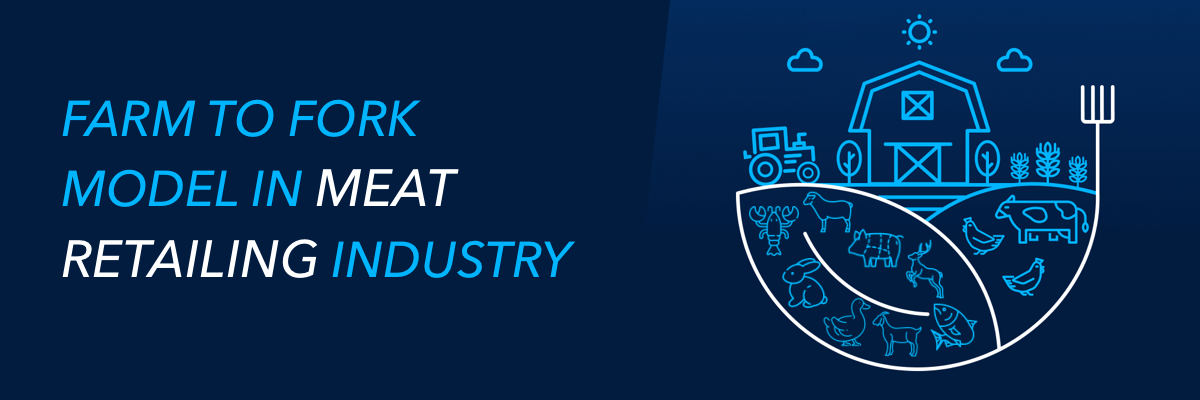
The Farm to Fork strategy is a holistic approach to food production and distribution that focuses on creating a sustainable, transparent, and efficient supply chain from farms directly to consumers. Originally introduced by the European Commission in May 2020 as part of the Green Deal Framework, this strategy aims to transform the entire food ecosystem while ensuring safety, quality, and accessibility for everyone. The main goals of the Farm-to-Fork strategy include –
- Providing safe, sustainable, sufficient, nutritious, and high-quality food that is accessible and affordable to all individuals.
- Safeguard the health of plants, soil, air, land, and animals, as well as the environment throughout the food supply chain – from production, transportation, distribution to consumption.
- Ensuring fair returns for everyone involved in the entire food supply chain, from farmers and processors to wholesalers, suppliers, and retailers.
- Promoting sustainability and transparency, making the food value chain more efficient and trustworthy.
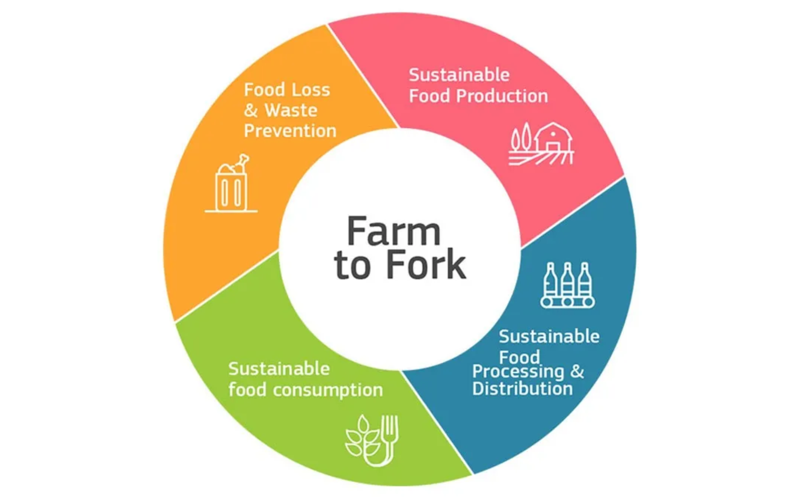
In the coming years, the farm to fork strategy has the potential to revolutionise the way farmers, processors, wholesalers, suppliers, and retailers operate within the food industry. This approach emphasises the importance of creating a seamless, sustainable, and transparent supply chain that benefits all parties involved, from the beginning to the end of the food production process. Therefore, the implementation of this strategy could lead to significant improvements and benefits for all stakeholders within the food chain.
Challenges in the Traditional Meat Retail Market
- Lack of Transparency in Sourcing – Customers often remain uncertain about whether the meat comes from a healthy and clean farm. There is limited visibility into how animals are raised, what they are fed, and whether ethical and hygienic farming practices are followed.
- No Clarity on Animal Welfare Standards – Traditional markets rarely provide information on whether animals are given proper nutrition, adequate space to roam, and a natural growth period. This raises concerns about both quality and ethics.
- Risk of Antibiotics and Chemical Contamination – Consumers are increasingly concerned about whether the meat is free from antibiotics, hazardous chemicals, artificial preservatives, colors, and flavoring agents. In traditional setups, such assurances are often missing.
- Inconsistent Hygiene and Safety Practices – There is no guarantee that proper hygiene standards are followed during slaughtering, processing, and handling. Exposure to open air, poor sanitation, and inadequate cleaning practices can lead to contamination and health risks.
- Lack of Standardized Handling and Storage Processes – Traditional meat markets often lack standardized procedures for handling, storing, and transporting meat. This inconsistency directly impacts product quality, freshness, and safety.
- Weak Cold Chain and Temperature Control – Maintaining the correct temperature (0–4°C) during storage and transportation is critical. However, many traditional vendors do not have proper refrigerated trucks or insulated delivery systems, leading to spoilage and bacterial growth.
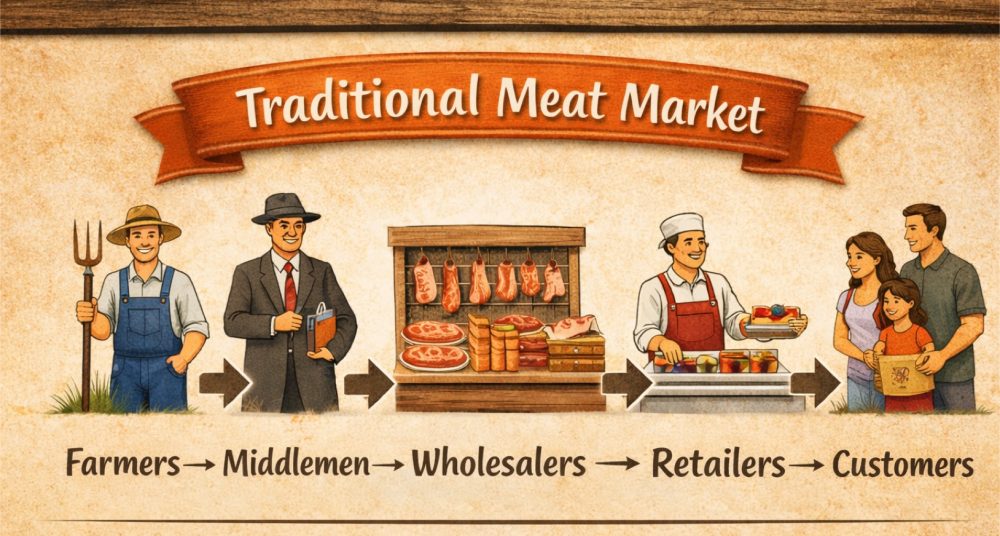
- Multiple Intermediaries in the Supply Chain – The involvement of several middlemen between farmers and retailers leads to delays, increased costs, and reduced freshness of the meat by the time it reaches the customer.
- No End-to-End Traceability – Customers are often left in the dark about the journey of their meat—from procurement and processing to storage and final delivery. This lack of traceability reduces trust and accountability.
- Limited Direct-to-Doorstep Delivery – Traditional meat shops often do not offer seamless doorstep delivery services. This creates inconvenience for customers who expect quick, hygienic, and reliable delivery options.
- Absence of Real-Time Logistics Tracking – There is usually no system to monitor real-time location data of deliveries. This lack of visibility leads to delays, poor coordination, and reduced customer confidence.
- Shortage of Skilled and Qualified Professionals – Many traditional setups do not employ trained meat scientists, qualified chefs, or skilled butchers. This impacts product quality, cutting standards, and overall customer experience.
- Poor Packaging and Delivery Standards – Deliveries are often not carried out using insulated bags or temperature-controlled packaging, which compromises freshness and hygiene during transit.
- Lack of Worker Health and Safety Measures – Routine health check-ups and vaccinations for workers in production and processing units are often neglected, increasing the risk of contamination and food safety issues.
- No Clear Accountability for Food Safety – In cases where meat causes health issues or serious complications, it is often unclear who is responsible. The absence of accountability mechanisms creates a major trust gap for consumers.
- High Risk of Contamination – Exposure to open environments, improper storage temperatures, and unclean handling conditions significantly increase the risk of contamination, making the meat unsafe for consumption.

Role of Farm to Fork Model in Meat Retailing Industry
- End-to-End Supply Chain Ownership Ensures Quality – In the farm to fork model, businesses manage the entire supply chain—from procurement at farms to processing, storage, and final delivery. This complete ownership ensures strict control over quality, hygiene, and freshness at every stage, unlike traditional systems where responsibility is fragmented.
- Strong Cold Chain Management Maintains Freshness – A key strength of this model is tight cold chain management. Meat is consistently maintained at controlled temperatures (typically 0–4°C), ensuring that it remains fresh, safe, and free from spoilage during transportation and storage. This directly solves one of the biggest issues in traditional markets—loss of freshness.
- Direct Sourcing from Farmers Improves Quality and Ethics – Farm to fork businesses work directly with livestock producers and fishermen, eliminating dependency on unknown sources. They also train farmers to maintain bio-secure environments, ensuring animals are raised in clean conditions, given proper feed, and allowed natural growth cycles.
- Antibiotic-Free and Chemical-Free Meat Supply – One of the biggest consumer concerns—chemical and antibiotic contamination—is addressed through strict sourcing standards. Meat is ensured to be free from antibiotics, artificial preservatives, colours, and flavouring agents, making it healthier and safer for consumption.
- Rigorous Quality Checks and Scientific Processing – Processing centres in the farm-to-fork model are equipped with trained professionals, lab technicians, and even meat scientists who conduct regular quality checks. These checks ensure proper nutrition, hygiene, and safety standards before the meat reaches customers.
- Elimination of Middlemen Increases Efficiency – In a traditional meat supply chain, the product moves through multiple intermediaries before reaching the customer. During this long journey, the meat gradually loses its freshness, nutritional value, and shelf life due to repeated handling and delays. As a result, consumers often end up paying higher prices while receiving lower-quality and less fresh products. In contrast, the farm to fork model eliminates unnecessary middle layers by directly connecting producers with end consumers. This streamlined approach reduces handling time, improves efficiency, and ensures that meat reaches customers in a fresher and more nutritious state, while also offering more competitive and fair pricing.
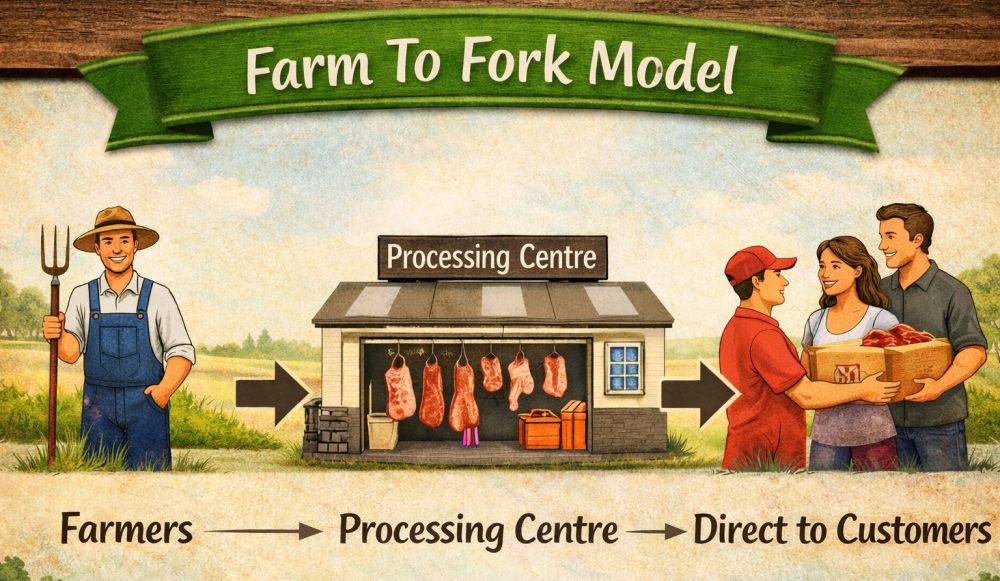
- Higher Margins with Competitive Customer Pricing – By eliminating intermediaries and reducing supply chain costs, businesses retain a larger share of revenue while offering fresh, high-quality meat to customers at more competitive and transparent prices. Farm to fork models can achieve profit margins ranging from 30% to 45%, significantly higher than traditional models where margins are distributed across multiple parties in the supply chain.
- Reduced Waste Through Smart Supply Chain Management – By using demand forecasting to predict customer needs, optimizing inventory levels to avoid overstocking, and maintaining a strict cold chain system with controlled temperature storage and transport, businesses can significantly reduce spoilage. This structured approach ensures meat remains fresh for longer, minimizes wastage at every stage, and improves overall operational efficiency.
- Technology for Traceability and Transparency – Technology helps track meat at every stage—from farm to customer—using digital systems. Each batch is tagged at the source and continuously monitored during processing, storage, and delivery through a central platform. Sensors and IoT devices check temperature and hygiene in real time to maintain quality. Live tracking tools also show shipment movement, creating a complete record of the product journey. This makes it easy to ensure quality, quickly fix issues, and build customer trust through full transparency.
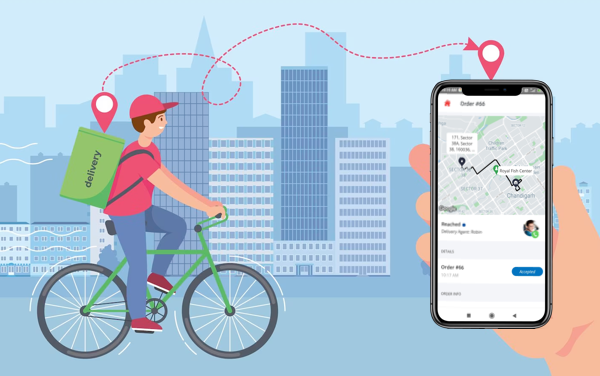
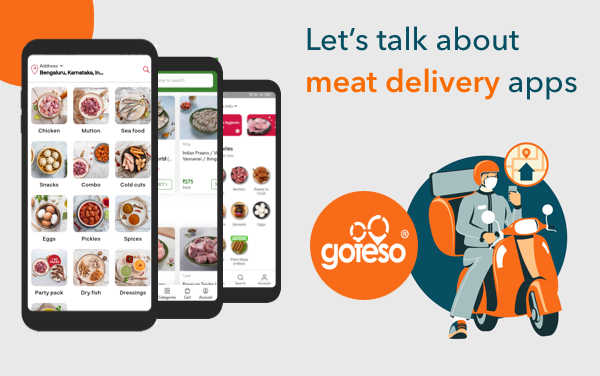
- Real-Time Logistics for Faster and Convenient Delivery – Real-time logistics tracking in meat delivery apps enables businesses to monitor every order from dispatch to final doorstep delivery. With optimized route planning and live tracking systems, deliveries become faster, more accurate, and supported by reliable ETAs. This streamlined process ensures timely, hygienic, and hassle-free delivery experiences, significantly improving customer convenience and service quality.
- Solving Core Consumer Pain Points – The model directly addresses the biggest issues faced by customers in traditional meat markets—
- Poor hygiene
- Lack of freshness
- No transparency
- Limited convenience
By focusing on these areas, farm to fork businesses have successfully built trust and loyalty among modern consumers. The farm to fork model is not just an operational improvement—it is a complete transformation of the meat retail industry. By integrating sourcing, processing, logistics, and delivery into a single controlled system, it eliminates inefficiencies, ensures food safety, and delivers high-quality meat directly to consumers. This is why it is often seen as the “Red Revolution” in India’s meat sector, setting new benchmarks for quality, transparency, and customer satisfaction.
Case Study | Licious
About Licious Company
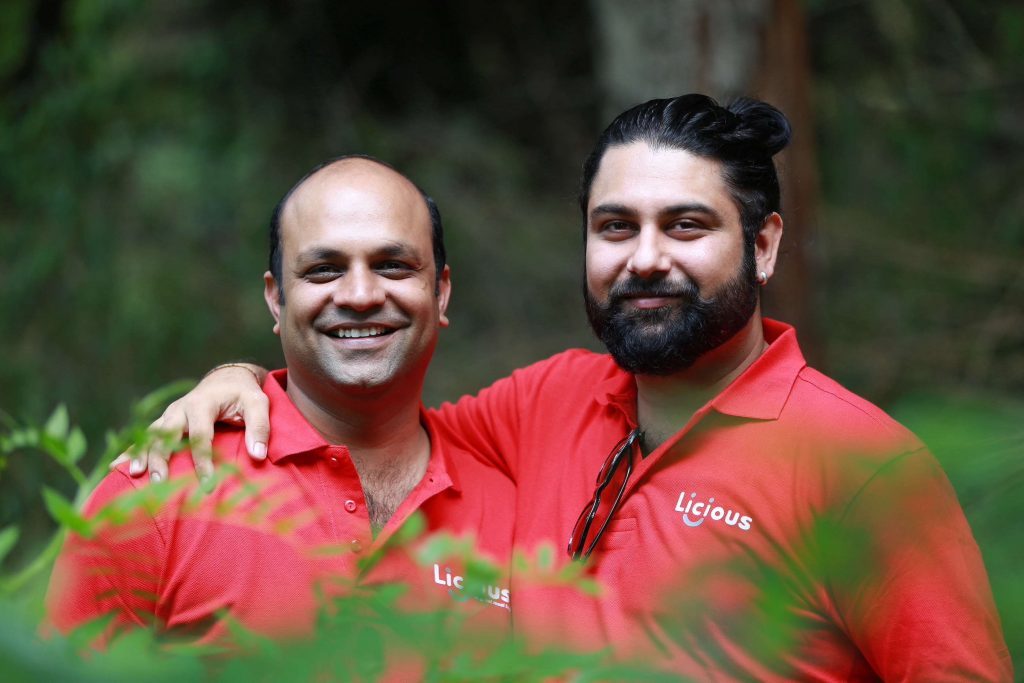
In exploring the farm to fork model, a notable example is Licious, one of the leading players in the Indian meat industry. Founded in 2015 by visionaries Abhay Hanjra and Vivek Gupta, this Bangalore-based startup set out to transform the traditional and largely unorganized meat market, where customers often had to compromise on both quality and pricing. The idea was born from a simple observation shared by the founders’ NRI friends, who often turned vegetarian during their visits to India due to the poor quality of meat and seafood compared to global standards. This insight inspired the mission of Licious—to ensure that they would never sell anything they themselves would not consume.
Licious is an online meat delivery platform that has built its reputation on offering premium, fresh, and high-quality meat, fish, eggs, mutton, seafood, and chicken delivered within approximately 2 hours. Over the years, the company has expanded its presence across India and currently serves 28 cities, including Agra, Bengaluru, Bhilai, Chandigarh, Chennai, Cochin, Coimbatore, Delhi, Faridabad, Gurugram, Hyderabad, Jaipur, Kanpur, Kolkata, Lucknow, Mohali, Mumbai, Nagpur, Nashik, Noida, Palakkad, Panchkula, Pune, Pondicherry, Thrissur, Trichy, Vijayawada, and Visakhapatnam. By combining convenience with strict quality control and hygiene standards, Licious has redefined customer expectations in the meat delivery space and strengthened the foundation of the farm-to-fork approach in India.
Licious Business Model
Licious has built its entire business model on the core principles of transparency, sustainability, and uncompromised quality. With a workforce of over 3,750 employees, the company ensures a seamless cold chain and supply chain ecosystem that consistently delivers fresh, safe, and high-quality meat products to its customers. By working closely with small-scale farmers and implementing strict quality control measures, Licious follows ethical and responsible sourcing practices across its entire network, making it a trusted brand in the Indian meat industry.
The company follows a fully integrated farm-to-fork model, where every stage—from procurement to processing, storage, and final delivery—is managed in-house. Meat is first sourced directly from farmers and then transported to processing centers, where it undergoes cleaning, cutting, and hygienic preparation. These operations are carried out across five major processing facilities located in Mumbai, Gurugram (Delhi-NCR), Hyderabad, and Bengaluru. Based on demand forecasting, the processed inventory is then efficiently distributed to delivery hubs across various cities in India.
Strengthening its farm-to-fork approach further, Licious manages its entire backend supply chain through a tightly controlled cold chain system. This ensures that every product maintains freshness and quality from the point of procurement to the end consumer. All products are stored and transported at a controlled temperature of 0–4°C and are free from antibiotics, chemicals, artificial preservatives, added colors, and flavoring agents. The company works closely with livestock farmers and fishermen, while also educating suppliers on bio-secure farming practices that minimize external contamination and ensure animal welfare standards such as proper nutrition, open space for movement, and controlled growth cycles.
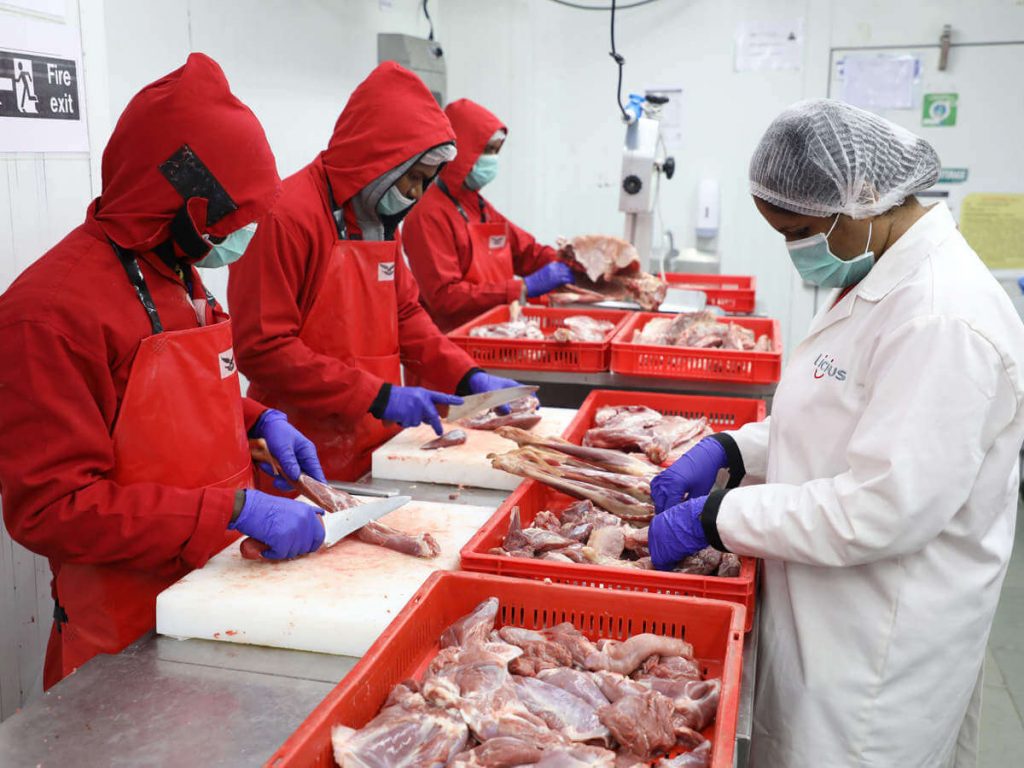
To maintain consistent quality, Licious conducts regular inspections across partner farms, supported by a trained procurement and quality assurance team. Technology plays a vital role in optimizing operations and maintaining efficiency across the supply chain. Advanced analytics are used for demand forecasting, while tracking systems help monitor product movement throughout the logistics network. Real-time location technologies, including mapping tools, assist in route optimization, address verification, delivery time estimation, and efficient hub-to-customer coordination within its hub-and-spoke distribution model.
At the core of its operations, Licious ensures strict compliance with quality standards at every stage. The central processing units follow detailed protocols to verify the age, weight, and health of animals before processing, along with precision cutting standards to maintain product consistency. Skilled butchers and trained culinary professionals handle the preparation of premium cuts, which are then transferred to cold storage units before being dispatched to city-level distribution hubs. Once an order is placed, it is fulfilled from the nearest hub after undergoing a final quality inspection by trained hub managers.
Currently, Licious operates five advanced processing facilities—one in Mumbai, one in Gurugram (Delhi-NCR), one in Hyderabad, and two in Bengaluru. The company places strong emphasis on freshness, ensuring that raw materials are processed and delivered within 24–48 hours of procurement. Throughout transportation, a controlled temperature range of 0–4°C is strictly maintained using refrigerated vehicles and insulated delivery packaging to preserve product integrity.
Ready-to-cook (RTC) products offer a shelf life of up to five days, while ready-to-eat (RTE) items can be safely stored under refrigeration for up to 30 days. With zero outsourcing, Licious operates over 90 temperature-controlled delivery centers across 12 major cities, including Delhi-NCR, Mumbai, Bengaluru, Hyderabad, Chandigarh, Pune, and Chennai. These centers are staffed with trained personnel who ensure proper handling and storage of products throughout the delivery process.

The company also relies heavily on technology to maintain environmental stability within cold storage facilities, closely monitoring parameters such as temperature, humidity, and airflow. Additionally, workforce health and safety are prioritized through routine medical check-ups and bi-annual vaccinations for employees working in production environments, ensuring strict adherence to hygiene and safety standards required to successfully sell meat online in a safe, reliable, and customer-trusted manner.
Licious Revenue
Licious currently serves more than 3 million customers across approximately 28 Indian cities, processing around 2 million orders every month. The brand has built a strong foundation on customer loyalty, reflected in a high repeat purchase rate of nearly 90%. Its customer base primarily includes urban, premium, and health-conscious consumers who value convenience, quality, and stringent food safety standards. At peak performance, the company has also achieved record-breaking demand, including over 72,000 orders in a single day during the T20 World Cup 2026.
From its early beginnings, Licious demonstrated strong growth potential. In its first year of operations, the company generated revenue of ₹1.47 crore through its online meat business. Since then, it has experienced significant scale-up, reporting a 47% year-on-year increase in net revenue to ₹1,166 crore in FY26 (ending March 31, 2026), compared to ₹795 crore in FY25. This growth has been largely driven by strong repeat consumption in key markets such as Bengaluru, Mumbai, and the NCR region. Online sales remain the primary revenue driver, contributing approximately ₹1,000 crore, with the company now targeting ₹1,800 crore in revenue for FY27.
It is important to note that while Licious has already achieved significant success in India—where meat consumption is relatively lower compared to many other countries—the growth potential in global markets with higher meat consumption is substantially greater. This presents a strong opportunity for new-age businesses and entrepreneurs to innovate and scale in this evolving industry.
Inspired by the success of Licious? If you are planning to build or scale a modern meat delivery business, now is the right time to take action. Connect with a leading meat delivery app development company to explore tailored solutions designed for growth and efficiency. Feel free to reach out for a free consultation or any queries related to the butchery and meat retail business. You can contact us via WhatsApp at +91 62833-64139, or email your requirements at sales@goteso.com